

Yes, long-standing acid reflux can raise the risk of esophageal cancer, but only in a small fraction of patients. About 10 to 20 percent of chronic GERD patients develop Barrett’s esophagus, and roughly 0.5 percent of those progress to esophageal adenocarcinoma each year. Early treatment changes that risk dramatically.
According to Dr. Ksheetij Kothari, an experienced Gastroenterologist in Pune and Advanced Endoscopy Specialist at Sahyadri Hospital, “Most patients with acid reflux never develop cancer, but the ones who ignore daily symptoms for ten or more years usually walk in late. Routine endoscopy catches most cases early.”
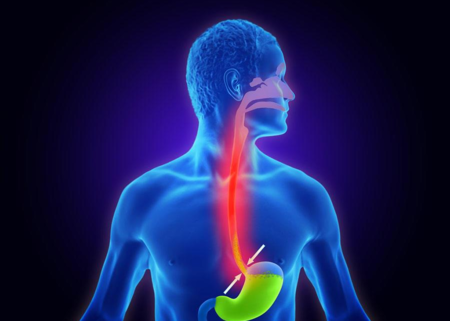
Understanding Acid Reflux and GERD
Acid reflux happens when stomach acid flows backward into the esophagus. Occasional reflux is common. Gastroesophageal reflux disease (GERD) is the chronic version, where reflux happens twice a week or more for several months.
The esophagus lining is not built for stomach acid. Repeated exposure causes inflammation and over time can trigger cellular changes called Barrett’s esophagus. About 10 to 20 percent of long-term GERD patients develop these changes, the strongest known precursor to esophageal adenocarcinoma.
Common GERD symptoms to recognise:
- Heartburn:Burning chest pain, especially after meals or when lying down
- Regurgitation:Sour or bitter fluid rising into the throat
- Difficulty swallowing:A feeling that food is stuck behind the breastbone
- Chronic cough or hoarseness:From acid reaching the upper airway at night
Symptoms of Esophageal Cancer Associated With Acid Reflux
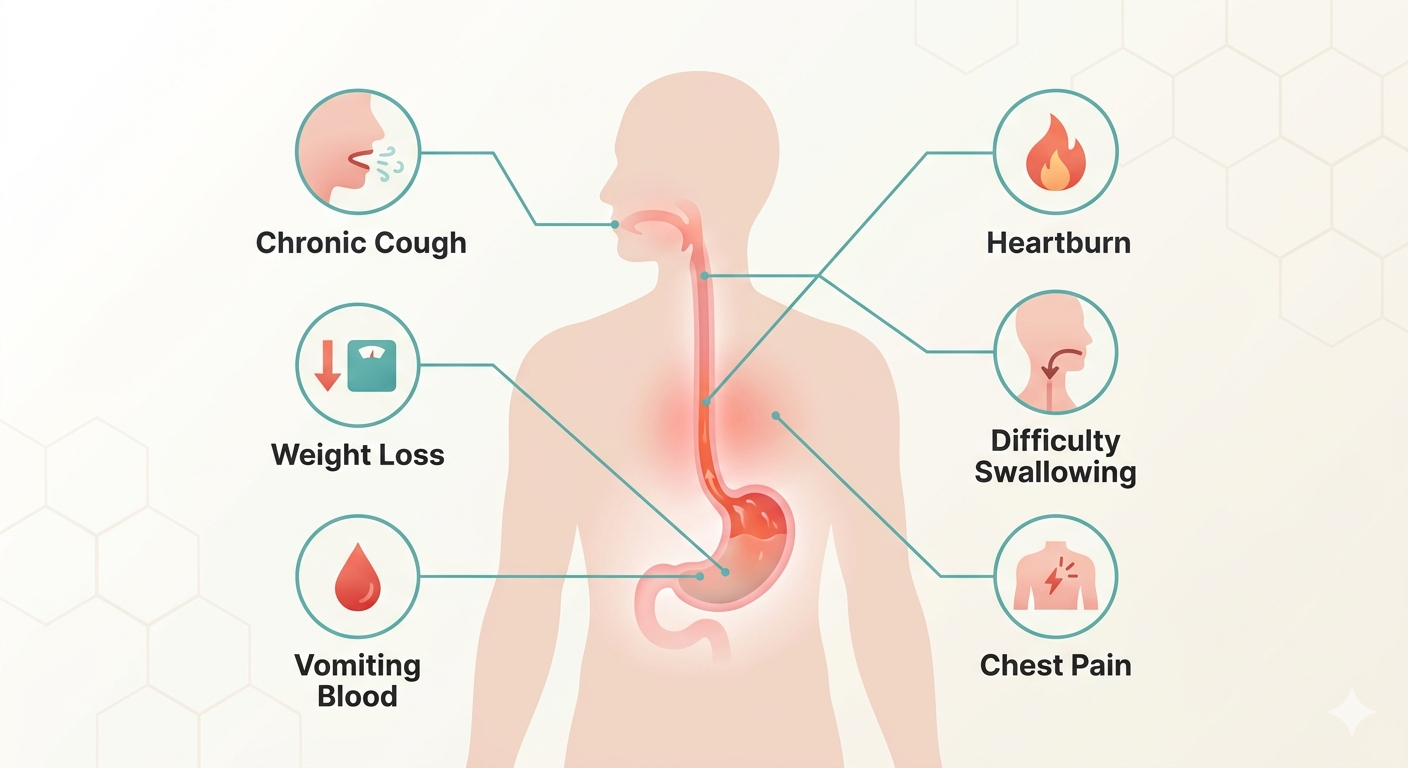
Early esophageal cancer often has no symptoms, which is why long-standing GERD patients benefit from periodic endoscopy. When symptoms do appear, they usually develop slowly and worsen over weeks to months.
- Progressive difficulty swallowing:Solids first, then soft food, eventually liquids
- Unintended weight loss:Losing more than 5 percent of body weight without trying
- Persistent chest pain:Pain behind the breastbone unrelated to meals or activity
- Vomiting blood or black stools:Suggests bleeding from the esophageal lining
- Hoarseness or chronic cough:When reflux or a tumour irritates nearby structures
- A change in heartburn pattern:Symptoms that suddenly worsen or feel different after years of being stable
One thing worth mentioning: if heartburn you have lived with for years suddenly feels different, that change matters more than the heartburn itself.
Risk Factors That Increase the Chances of Esophageal Cancer
Not everyone with reflux develops cancer. A few specific factors push the risk up.
- Long-standing GERD:Reflux for 10 or more years multiplies the risk severalfold
- Barrett’s esophagus:The strongest known precursor, raising annual cancer risk to around 0.5 percent
- Obesity:Increased abdominal pressure pushes acid into the esophagus more often
- Smoking and alcohol:Tobacco roughly doubles the risk; heavy alcohol adds further harm, especially for squamous cell cancer
- Male gender and age over 50:Esophageal adenocarcinoma is far more common in men, especially after middle age
- Family history:A first-degree relative with esophageal or stomach cancer raises baseline risk
- Low-fruit, low-vegetable diet:Reduced antioxidant intake is linked to higher esophageal cancer rates
For ongoing reflux care, see the acid peptic disease treatment page or read about bile leak after cholecystectomy for a related upper-GI condition.
Worried about long-standing acid reflux? Book a consultation with one of Pune’s leading gastroenterologists today and get a clear evaluation
When to See a Doctor

Most heartburn is harmless. But certain patterns deserve proper assessment, often with endoscopy. See a doctor right away if you have:
- Heartburn more than twice a week for over 3 months
- New difficulty swallowing solids or liquids
- Unintended weight loss of more than 5 percent body weight
- Vomiting blood or noticing black, tarry stools
- Severe or progressive chest pain unrelated to physical effort
- Persistent hoarseness, chronic cough, or sore throat for over 4 weeks
- Heartburn that suddenly changes character after years of being stable
Here’s a rough screening guide by patient profile:
| Patient Profile | Recommended Action |
| GERD under 5 years, no alarm symptoms | Lifestyle changes plus PPIs, review at 8 weeks |
| GERD over 5 years or alarm symptoms | Upper GI endoscopy |
| Known Barrett’s esophagus | Surveillance endoscopy every 3 to 5 years |
| First-degree relative with esophageal cancer | Earlier baseline endoscopy |
Patients across Pune trust Dr. Ksheetij Kothari for upper-GI and reflux care due to his advanced endoscopy experience and attentive follow-up. Recognised at the International Healthcare Awards 2022, he handles complex acid reflux cases and Barrett’s surveillance with confidence.
Living with daily heartburn? Book an endoscopy consultation with Pune’s leading gastroenterologists today.
FAQs
Can occasional acid reflux cause esophageal cancer?
No, occasional reflux is common and does not raise cancer risk. Daily or weekly symptoms persisting for many years are the concerning pattern.
How long does it take for GERD to lead to cancer?
Progression usually takes 10 to 20 years and only affects a small fraction of patients, mainly those with Barrett’s esophagus.
How is esophageal cancer diagnosed?
Upper GI endoscopy with biopsy is the standard test, often combined with CT or PET scans to assess disease stage.
Can lifestyle changes alone prevent esophageal cancer?
Lifestyle changes help, but patients with long-standing GERD or Barrett’s still need regular endoscopic surveillance