
Medically Reviewed by Dr. Ksheetij Kothari, MBBS, M.D (Medicine), D.M (Gastroenterology)
Biliary cirrhosis is a general term that describes two distinct diseases, both of which affect the bile ducts within the liver in long-standing blockage. Immune destruction of the bile ducts in primary biliary cirrhosis is a slow process, and in many cases the disease is diagnosed before cirrhosis has occurred. Therefore, primary biliary cirrhosis is now more accurately described as primary biliary cholangitis and by catching the disease at an early stage, it is possible to slow the disease process with appropriate treatment.
“Tiredness and itchy skin are two of the most common early symptoms of liver and bile duct disease and when combined with abnormal liver tests it is worth investigating. Biliary disease is far easier to treat to slow down progression of the disease if it is picked up early.” Dr. Ksheetij Kothari, Gastroenterologist in Pune
What Are the Early Symptoms of Biliary Cirrhosis?
The very early stages of the disease can be symptomless with the only sign being a raised alkaline phosphatase reading in a routine blood test for liver function. As the disease progresses, persistent fatigue and the sensation of itching are two of the most common symptoms of PBC. The itching can be so severe that it is worse at night and can occur all over the body and not just on the hands and feet. There are many other symptoms which can occur in later stages of the disease such as jaundice (yellow skin and eyes), pale stools, dark urine and xanthelasmata (small fatty lumps on the eyelids).
Persistent Fatigue
Tap to read
Usually the first symptom, sometimes with brain fog.
Itching
Tap to read
Often worse at night and not always limited to the hands and feet.
Dry Eyes and Mouth
Tap to read
Can appear months or even years before other symptoms.
Jaundice
Tap to read
Yellowing of the skin and eyes, which tends to appear later as bile builds up.
Pale Stools, Dark Urine
Tap to read
Signs that bile isn’t flowing normally.
Fatty Deposits Around the Eyelids
Tap to read
Small yellowish deposits linked to raised cholesterol in some people.
Dry eyes and mouth can be present for months and even years before other symptoms occur. Jaundice of the skin and eyes occurs as bile builds up in the body. A person with bile duct cirrhosis may have pale colored stools and dark colored urine. Fatty deposits (xanthomas) may form around the eyelids. Poor absorption of fat results in thinning of the bones and can cause a deficiency of vitamins, particularly vitamin K.
A Quick Note on the Above – for those that do not read below: The majority of people that are diagnosed with Primary Biliary Cholangitis (PBC) do not have cirrhosis when they are diagnosed. Thus the name of the disease was recently changed to reflect this fact.
Learn more about how liver and bile duct conditions are evaluated.
What Causes Biliary Cirrhosis of the Liver?
The primary form of Biliary Cirrhosis is thought to be an autoimmune condition in which the body’s immune system mistakenly attacks the small bile ducts within the liver leading to their destruction. As the bile cannot escape from the liver it becomes stagnant within the liver causing inflammation and scarring of the liver tissue. The exact cause of primary Biliary Cirrhosis is not fully understood, but it is thought that people with a genetic susceptibility to the condition may be triggered by an infection or by smoking. The condition is more common in women and generally affects people in their middle age. Many women with the condition also have other autoimmune diseases such as hypothyroidism or Sjögren’s syndrome (which causes dry eyes and mouth).
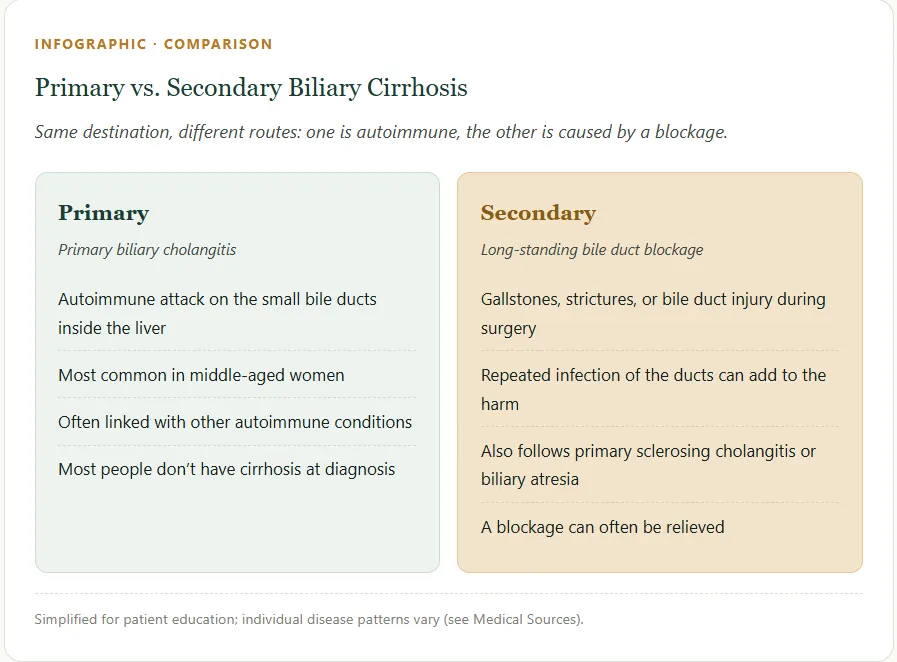
Secondary Biliary Cirrhosis results from a variety of mechanical causes that lead to bile stasis and subsequently result in damage to the bile ducts with associated scarring of the liver. This form of liver disease is most commonly caused by gallstones, a stricture of the bile ducts (narrowing), a bile duct injury that has resulted in a bile leak or stricture, or repeated bouts of infection of the bile ducts. It can also be caused by primary sclerosing cholangitis and a number of congenital conditions such as biliary atresia.
Can Biliary Cirrhosis Lead to Serious Liver Complications?
No, but it can eventually progress to cirrhosis of the liver over years if the bile ducts continue to be damaged. The complications of advanced liver disease are increased pressure in the liver’s veins (portal hypertension), esophageal varices which can bleed, ascites (excess fluid in the abdominal cavity), hepatitic encephalopathy (hepatic confusion caused by a build-up of toxins) and finally liver failure. There is also an increased risk of primary liver cancer in advanced cases of the disease.
Treatment of primary and secondary bile duct cirrhosis is aimed at slowing the progression of the liver damage. Primary biliary cirrhosis is typically treated with ursodeoxycholic acid which improves the flow of bile. However, up to 40% of people with this condition do not have an adequate response to this medication and are considered for other second-line treatments that have recently been approved. Secondary biliary cirrhosis is treated by relieving the blockage to the bile ducts. This may be by widening a narrow bile duct or by stenting a bile duct using the ERCP approach. Liver transplant is considered for people with advanced secondary bile duct cirrhosis where medication or other treatments are not sufficient.
Clinic address, consulting hours, and contact information are available on the contact page
When Should You Consult a Doctor for Possible Biliary Cirrhosis?
Complaints of persistent itching without a rash, fatigue that does not improve with rest, dryness of the eyes and mouth and abnormal results from liver function tests all need to be disclosed to your doctor even if you feel generally well. Symptoms that indicate a problem with bile flow such as yellowing of the skin and eyes and causing of pale dry stools and dark urine need to be assessed quickly. Also, a family history of PBC or other autoimmune diseases need to be disclosed.
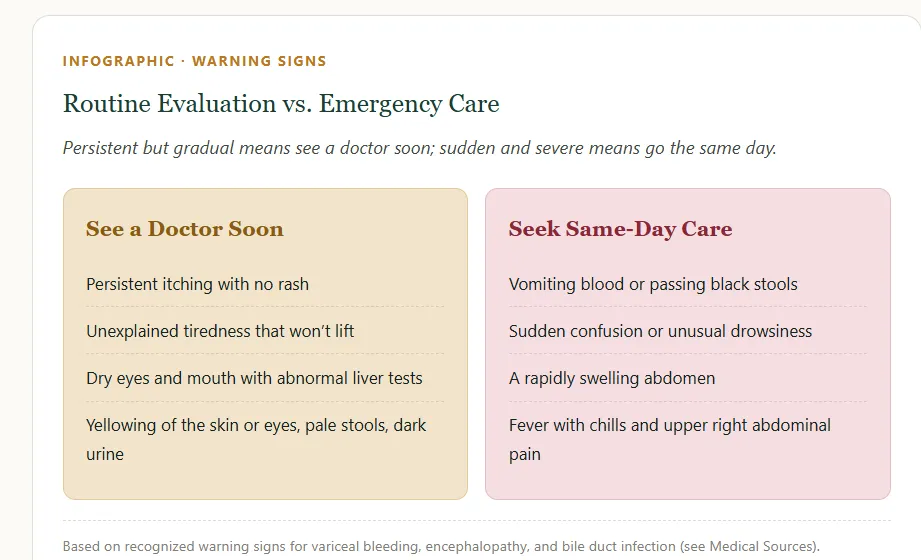
Emergency medical care is needed for symptoms of sudden worsening. For example, sudden onset of vomiting blood or black stools may indicate a gastrointestinal bleeding crisis. Sudden drowsiness or confusion, a rapidly expanding abdomen, or a fever with chills and upper right quadrant pain may indicate an acute complication of liver disease such as liver abscess or cholangitis. Patients with known liver disease and a sudden severe complaint should go to the emergency department the same day.
Key Takeaway
When identified early on in its development of liver disease, biliary cirrhosis can be effectively managed by the appropriate treatment in order to slow disease progression.
Medical Disclaimer: The information above is intended only to provide a general understanding of biliary liver disease and is not an attempt to diagnose or treat any medical condition. Since every individual is unique, it is important to receive a proper medical evaluation and receive treatment from a qualified healthcare provider for the best possible outcome.
FAQs
Primary Biliary Cirrhosis (PBC) or Primary Biliary Cholangitis (PBC)?
Primary biliary cholangitis (PBC) used to be known as primary biliary cirrhosis. However, most people with this disease are not in cirrhosis when diagnosed. Thus the term biliary cirrhosis is used for both the primary form and secondary biliary cirrhosis, which develops after a prolonged period of bile duct obstruction.
Can biliary cirrhosis cause no symptoms at all?
Most people with Primary Biliary Cholangitis (PBC) have no symptoms at all when it is first diagnosed. They are found to have liver disease through an abnormal result on a liver blood test. Later on in the disease, fatigue and itching are common symptoms.
Who is most at risk of biliary cirrhosis?
Primary biliary cirrhosis is most common in middle-aged women and people with other autoimmune diseases. Family history also increases risk of developing this secondary form of biliary cirrhosis. Secondary biliary cirrhosis is caused by long-standing obstruction of the bile ducts due to gallstones, strictures of the bile ducts (due to injury, inflammatory disease, etc.), and primary sclerosing cholangitis.
How is primary biliary cholangitis diagnosed?
A blood test will show that levels of alkaline phosphatase in the blood are raised. An itochondrial antibody test will show that most people with PBC will test positive for these antibodies. A scan will confirm that there are no blocked ducts. Occasionally a liver biopsy is required to confirm the diagnosis of PBC.
Can biliary cirrhosis be cured?
While the primary form of the disease has no cure, it is possible to slow its progress using treatment. The secondary form can be cured if the blockage is cleared early enough to prevent any further damage to the liver.
When is a liver transplant considered?
Liver transplant is considered when the liver fails to function completely or when the liver suffers from serious complications which cannot be treated with medicine or interventional procedures. Deciding when the time is right for a transplant is the work of a liver specialist and depends on a number of factors including the degree of liver dysfunction and the severity of complications.
Medical Sources
- “Primary Biliary Cholangitis (PBC)” — MSD Manual Professional Edition
- “BSG and UK-PBC Primary Biliary Cholangitis Treatment and Management Guidelines” — Gut (British Society of Gastroenterology)