
Hepatitis C can cause damage to your liver however this tends to be a slow process and will not cause issues in all patients. Most people with Hepatitis C will carry the infection for many years, often without knowing. Your liver can slowly become scarred due to the ongoing low grade inflammation. Many people will not develop any serious damage, however others will progress to cirrhosis. This can depend on various factors such as the virus, the patient, and how long they have had the infection for. The good news is now this can be cured, and usually damage will stop progressing.
“Hepatitis C can sit quietly in the liver for years without a single symptom. Testing is the only way to know, and the earlier it’s found, the less damage there is to deal with.” – Dr. Ksheetij Kothari (Gastroenterologist, Pune).
What Are the Symptoms of Chronic Hepatitis C?
Many people will not experience any symptoms. Chronic Hepatitis C can often be diagnosed by accident during routine blood tests or blood donation screening. When symptoms do occur they are very general. These can include prolonged fatigue, poor sleeping, nausea, muscle and joint pain, reduced appetite and feelings of low mood. These symptoms can often be attributed to stress and are rarely noticed by people.
Lingering Tiredness
Tap to read
One of the most frequent complaints, often blamed on stress or a busy life.
Poor Sleep
Tap to read
Disturbed sleep is common and easy to attribute to other causes.
Nausea and Weak Appetite
Tap to read
Vague digestive symptoms that rarely point straight to the liver.
Muscle and Joint Aches
Tap to read
Can occur because hepatitis C sometimes affects the body beyond the liver.
Low or Anxious Mood
Tap to read
Mood changes are reported in some people with chronic infection.
Jaundice (Later Sign)
Tap to read
Yellowing of the skin and eyes, usually after significant scarring.
More noticeable symptoms tend to occur when the liver has become significantly scarred. This can include jaundice (yellow skin and eyes), swollen legs or tummy, bruising easily, dark urine and confusion. Occasionally the virus can affect other organs causing kidney problems or skin rashes. This can make symptoms unreliable.
Quick Note: Many people with Chronic Hepatitis C will not experience any symptoms.
Find out how Hepatitis is assessed and how it affects your liver.
What Factors Can Increase the Risk of Liver Damage From Hepatitis C?
The rate of liver scarring varies greatly between individuals. It is estimated that around 5-30% of people with chronic hepatitis C will develop cirrhosis over 2-3 decades however some people will never develop significant damage. Excessive alcohol consumption is one of the biggest factors that can cause progression. Being infected after the age of 40, being male, immunosuppression and having hepatitis B or HIV can all cause faster progression.
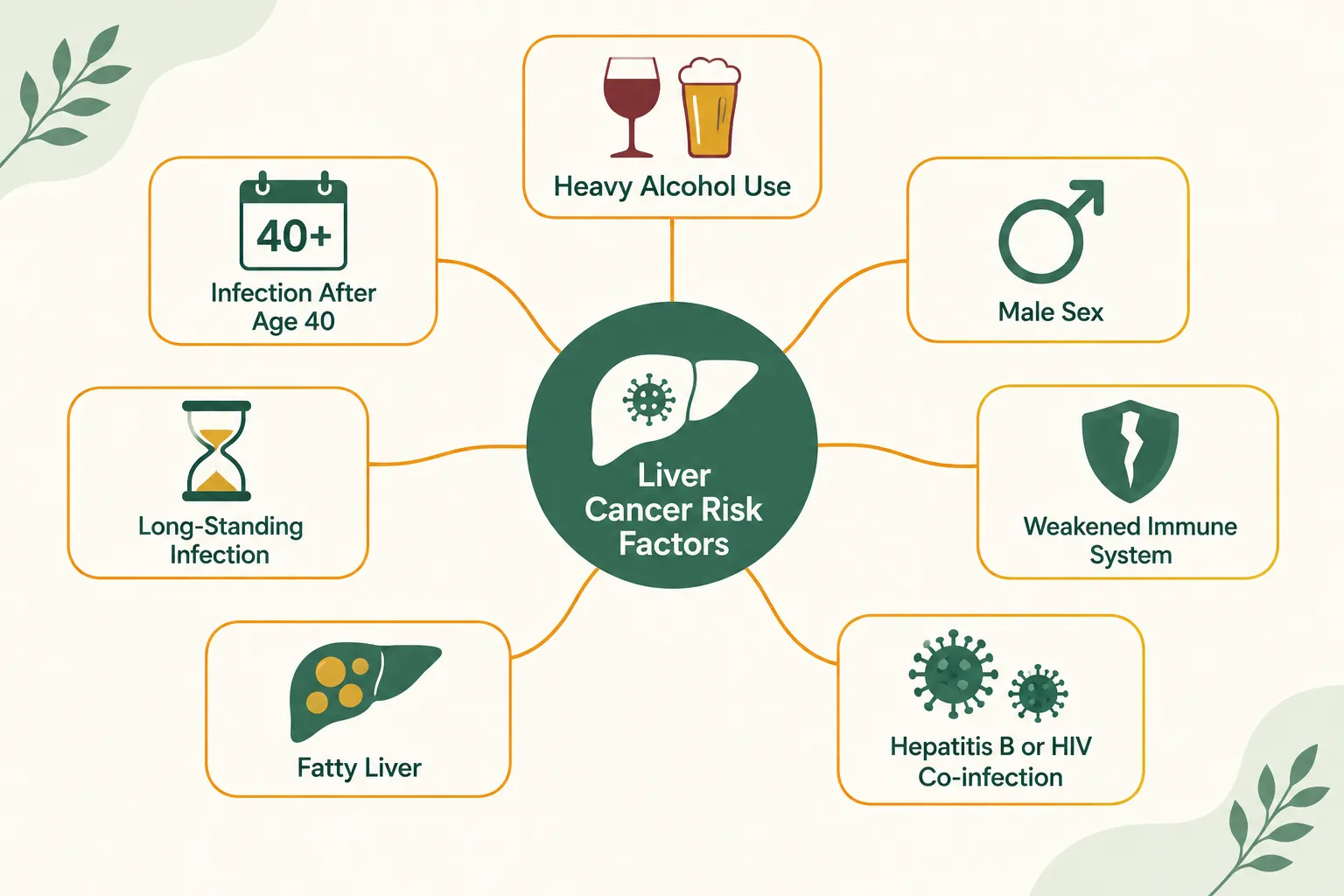
Fatty liver can also accelerate liver damage. Having excess fat in your liver (common in those with obesity and type 2 diabetes) can cause extra inflammation. The longer you have the virus the more damage tends to occur. Therefore, those who have had the infection for many years and have not treated it will have the greatest risk. These factors do not guarantee damage will occur however they increase the likelihood.
How Is Liver Damage From Chronic Hepatitis C Diagnosed?
Liver damage can be diagnosed in two ways. Firstly, a blood test can be performed to look for Hepatitis C antibodies. This shows that the patient has encountered the virus. Secondly, a HCV RNA test can be carried out. This looks for the virus in the blood. To determine the extent of damage, a Fibroscan is generally considered the most accurate method of assessing liver damage without an invasive procedure. Often this will be combined with a blood test to give a score (FIB-4).
Doctors will score how scarred your liver is. This can range from F0 (no damage) to F1 and F2 (mild to moderate). F3 is severe fibrosis and F4 is cirrhosis. If your liver is stiffer than around 12.5 kilopascals this is commonly used to indicate cirrhosis. Biopsy was previously common however is now mostly reserved for when there is disagreement between non-invasive tests. An ultrasound may be performed to look at the shape of the liver.
Find out our clinic address, consultation times and contact details.
When Should You Consult a Doctor for Possible Hepatitis C-Related Liver Damage?
If you think you may have been exposed to Hepatitis C you should get tested. This can include receiving a blood transfusion before screening was implemented, using unsafe needles or unsterilised equipment for tattoos, piercings or dentistry. You should also get tested if your liver tests are abnormal. This is important as it can be treated. Antiviral tablets can be prescribed for 8-12 weeks and this will cure more than 95% of people. Usually once cured further scarring will stop. In India, these medications are provided free of charge at designated centres under the National Viral Hepatitis Control Programme.
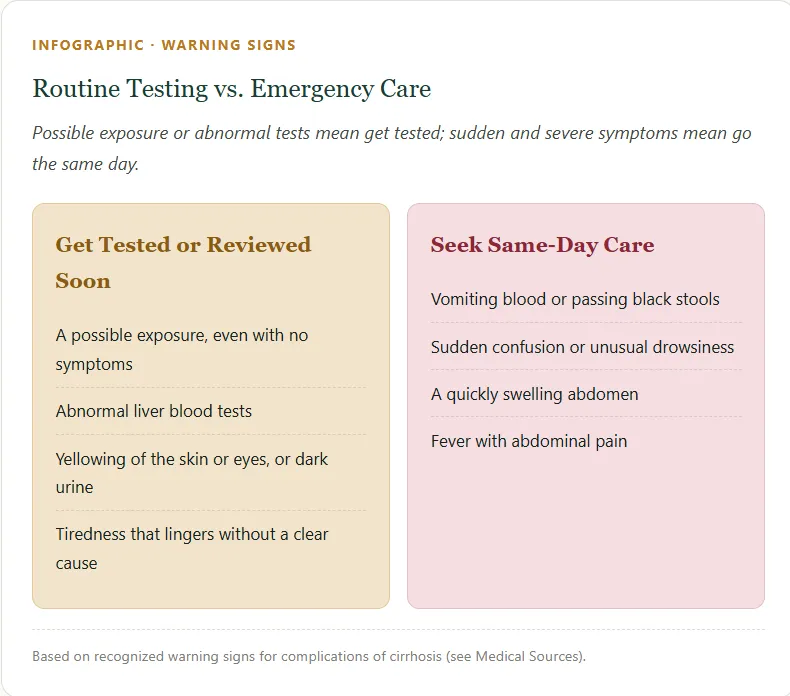
Even once cured you should follow up if you have significant scarring. This is because you are still at risk of liver cancer. Some symptoms require immediate attention. For example, vomiting blood or passing black stools, sudden confusion or odd sleepiness, a rapidly enlarging tummy and fever with abdominal pain can indicate serious complications from cirrhosis. As a rule of thumb anything sudden or severe in a patient with known liver disease should be seen the same day.
Summary
Chronic Hepatitis C can cause silent liver damage however this can be picked up with a simple blood test. It can be treated so it is worth getting tested even if you are feeling well.
Disclaimer: The information given in this article is for general education purposes only and should not be used as a substitute for an individual assessment. Hepatitis C can vary between patients and should always be treated individually by a qualified healthcare professional.
FAQs
Will everyone with Chronic Hepatitis C develop liver damage?
No. It is estimated that around 5-30% will develop cirrhosis over 20-30 years. Some people will not develop much damage for many years. Alcohol, age of infection and co-infection with Hepatitis B or HIV can all affect how fast damage occurs.
Can Hepatitis C be cured?
Yes. Taking direct acting antivirals for 8-12 weeks will cure more than 95% of patients. Once cured no virus can be detected in the blood 12 weeks after finishing treatment.
Can liver damage improve after curing Hepatitis C?
Often. Curing Hepatitis C is associated with improvement in scarring, reducing the risk of liver failure and cancer. However, those with advanced cirrhosis may not fully recover so monitoring can continue.
If my liver enzymes are normal does this mean my liver is okay?
No. Around a third of patients with Chronic Hepatitis C will have normal ALT levels. This means they can still have the virus detected but will need to be assessed for scarring.
How is Hepatitis C diagnosed?
An antibody test will be performed and then a HCV RNA test to confirm active infection. Liver stiffness and blood scores will be performed to determine extent of scarring.
Do I need to be monitored once Hepatitis C is cured?
If you have significant scarring or cirrhosis you will usually need to be screened for liver cancer with an ultrasound. Your doctor will decide your monitoring depending on how bad your damage is.