
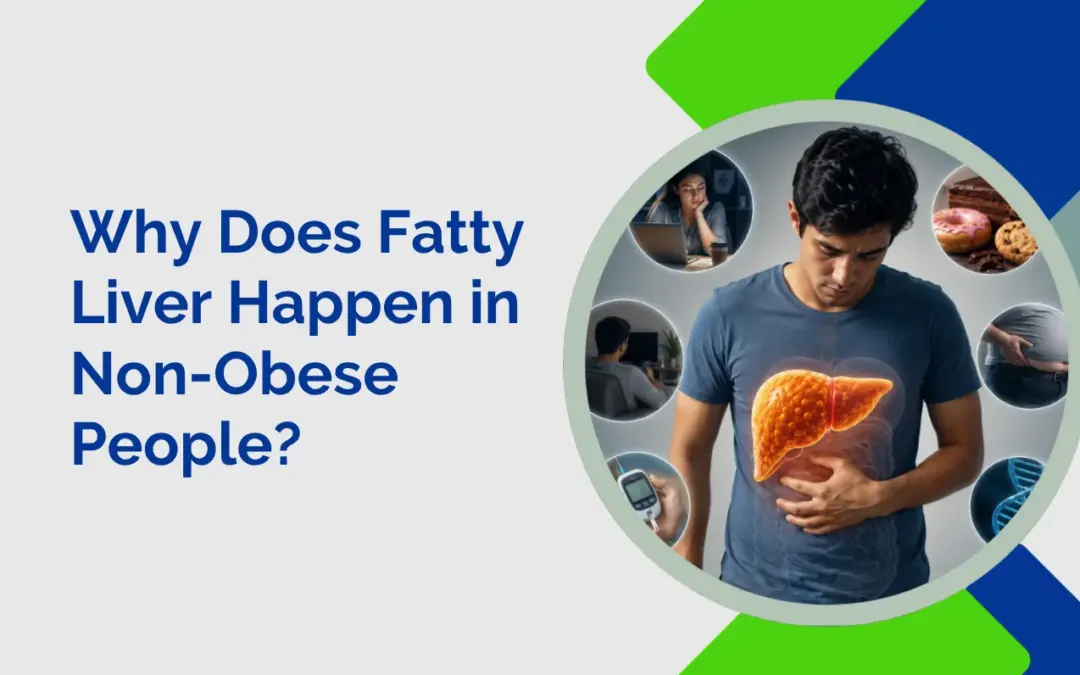
Fatty liver in people who aren’t overweight usually comes down to hidden metabolic dysfunction. Visceral fat, genetics and a sugar heavy diet can push fat into liver cells even with a completely normal BMI. The real issue sits in how the body handles sugar and fat internally rather than in overall size.
According to Dr. Ksheetij Kothari, recognized as one of the Best Gastroenterologist in Pune, “A normal weight on the scale doesn’t rule out fatty liver disease. I’ve seen plenty of lean patients with significant liver fat, usually tied to insulin resistance or fat sitting around the organs rather than under the skin.”
What Causes Fatty Liver in People Who Aren't Overweight?
Lean NAFLD runs on its own set of drivers. Weight rarely tells the full story here.
Visceral fat: Fat wrapped around internal organs behaves nothing like fat under the skin. It’s strongly linked to liver fat even at a normal BMI.
Insulin resistance: Reduced sensitivity to insulin pushes more fat toward the liver regardless of what the scale says.
Genetic factors: Certain gene variants, more common in South Asian populations, raise the risk independent of body size.
Diet composition: Fructose, refined carbs and ultra processed food can all build up liver fat without any noticeable weight gain.
Confirming lean NAFLD takes imaging and metabolic testing rather than a BMI check. Fatty liver disease treatment at the clinic looks specifically at what’s driving the fat, not just body weight.
Is Lean NAFLD Less Serious Than Fatty Liver in Obese Patients?
Being thin doesn’t mean a milder disease course. Not automatically, anyway.
Progression can be just as severe: Research shows lean NAFLD patients develop inflammation and fibrosis at rates comparable to obesity related fatty liver.
Diagnosis often comes later: Clinicians don’t always suspect fatty liver in lean patients, so it frequently gets caught at a more advanced stage.
Metabolic risk still applies: Lean NAFLD patients often carry the same cardiovascular and diabetes risk as their obese counterparts.
Muscle loss can play a role: Reduced muscle mass, sometimes called sarcopenia, has been linked to higher fatty liver risk even in lean individuals.
Understanding how fatty liver progresses from its earliest stage helps put lean NAFLD in context. Our piece on stage 1 fatty liver covers what that early, often reversible window looks like.
Why Choose Dr. Ksheetij Kothari?
Dr. Ksheetij Kothari completed his DM in Gastroenterology at St. John’s Medical College, Bangalore, with fellowships in Advanced Endoscopy and Endoscopic Ultrasound. He evaluates fatty liver based on actual metabolic and imaging findings rather than assuming a normal weight rules it out.
Lean NAFLD deserves the same attention as fatty liver in any other patient. Call 9765180181 to get your liver properly assessed.
Think fatty liver only affects people who are overweight? Book an appointment to find out what your liver health actually looks like.
FAQs
Can fatty liver disease occur in people with a normal BMI?
Yes, this is known as lean NAFLD and is fairly common.
What are the main lean NAFLD causes?
Visceral fat, insulin resistance, genetics and a poor diet.
Is lean NAFLD less dangerous than fatty liver in obese patients?
No, it can progress just as seriously if left unchecked.
How is fatty liver disease diagnosed in lean individuals?
Through blood tests and imaging rather than BMI alone.
References:
- NCBI (PMC) — Lean nonalcoholic fatty liver disease and sarcopenia: https://www.ncbi.nlm.nih.gov/pmc/articles/PMC10327437/
- NCBI (PMC) — Fatty liver in lean patients: is it a different disease?: https://pmc.ncbi.nlm.nih.gov/articles/PMC3959355
Disclaimer
This blog is for educational purposes only and isn’t a substitute for professional medical advice; consult a qualified doctor for any symptoms or concerns.