
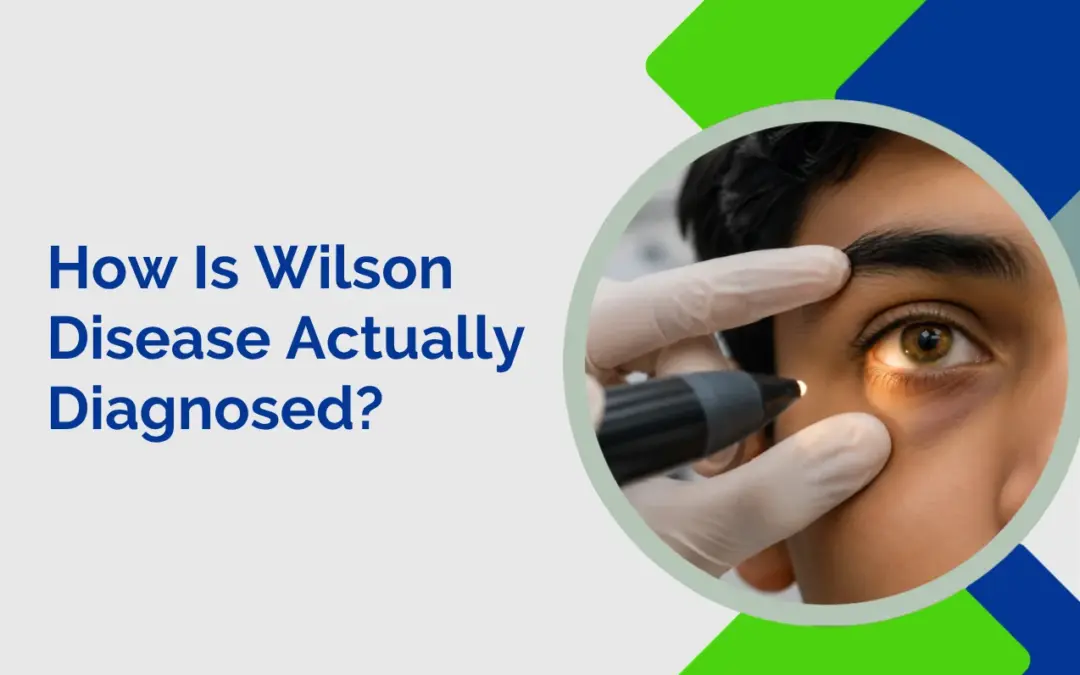
Wilson disease has no single confirmatory test. Diagnosis relies instead on a combination of findings: blood and urine copper levels, a slit-lamp eye examination, liver tissue analysis, and genetic screening. Copper accumulation can closely resemble other liver or neurological conditions, so specialists evaluate these results together rather than confirming the diagnosis from one isolated test.
According to Dr. Ksheetij Kothari, recognized as one of the Best Gastroenterologist in Pune, “Patients often expect one blood test to settle the question. Wilson disease diagnosis rarely works that way. It’s usually a pattern across several tests that points us to the answer.”
What Tests Are Used to Diagnose Wilson Disease?
A Wilson disease diagnosis test panel typically begins with blood and urine analysis. More specific investigations follow depending on the initial results.
Ceruloplasmin and serum copper: Low ceruloplasmin combined with abnormal copper levels is a common early indicator. Results can still appear normal in some patients, however.
24-hour urine copper collection: Elevated urinary copper excretion over a full day supports the diagnosis and helps monitor how well treatment is working over time.
Slit-lamp eye exam: This examination checks for Kayser-Fleischer rings, copper deposits around the cornea that represent a hallmark finding in many cases.
Liver biopsy and genetic testing: A liver tissue sample can measure copper content directly. Genetic testing complements this by identifying mutations in the ATP7B gene.
Interpreting these results together requires a specialist experienced in liver disorders. Hepatitis treatment at Sahyadri Hospital includes the broader liver workup this diagnosis depends on.
Why Isn't One Test Enough to Confirm Wilson Disease?
Each individual test carries its own limitations. That is precisely why physicians avoid relying on a single result.
Ceruloplasmin can be misleading: Levels sometimes appear normal in patients who do have Wilson disease, and low in those who don’t. This limits its reliability as a standalone marker.
Kayser-Fleischer rings aren’t always present: These rings appear in most neurological presentations, but far less consistently in patients whose symptoms remain confined to the liver.
Symptoms overlap with other liver diseases: Because the early presentation can resemble fatty liver disease or autoimmune hepatitis, a broader diagnostic workup often becomes necessary.
Genetic testing has its own limits: Standard panels do not identify every disease-causing mutation. So a negative genetic result does not fully rule out the diagnosis.
Recognizing symptoms early is often what prompts this diagnostic process in the first place. Our piece on Wilson disease in teenagers looks at the warning signs that typically lead to testing.
Why Choose Dr. Ksheetij Kothari?
Dr. Ksheetij Kothari completed his DM in Gastroenterology at St. John’s Medical College, Bangalore, with fellowships in Advanced Endoscopy and Endoscopic Ultrasound. He builds a Wilson disease diagnosis on a complete pattern of findings rather than a single abnormal result.
An unclear liver test result warrants a proper diagnostic workup, not assumption. Call 9765180181 for a thorough evaluation.
Been told your liver enzymes look off with no clear explanation? Book an appointment to check whether Wilson disease could be behind it.
FAQs
What is the first test doctors use for Wilson disease?
Blood tests checking ceruloplasmin and serum copper levels usually come first.
Can a single blood test confirm Wilson disease?
No, diagnosis usually needs several tests evaluated together.
What is a Kayser-Fleischer ring?
A copper deposit around the cornea, seen during an eye exam.
Is genetic testing necessary for a Wilson disease diagnosis test?
Not always, but it can help confirm unclear or borderline cases.
References:
- NIDDK (NIH) — Diagnosis of Wilson disease: https://www.niddk.nih.gov/health-information/liver-disease/wilson-disease/diagnosis
- NCBI Bookshelf (GeneReviews) — Wilson Disease: https://www.ncbi.nlm.nih.gov/books/NBK1512/
Disclaimer
This blog is for educational purposes only and isn’t a substitute for professional medical advice; consult a qualified doctor for any symptoms or concerns.