
Medically Reviewed by Dr. Ksheetij Kothari, MBBS, MD (Medicine), DM (Gastroenterology)
Having lived with cirrhosis for 20 years raises a lot of understandable queries about life expectancy and the timing of events. However, the years since diagnosis don’t tell the whole story, since some patients can remain stable as their liver still does its work, while others need special attention.
“The duration of cirrhosis is only one part of the picture. What matters most is the liver’s current function, whether complications have developed, and how well the underlying cause is being managed.” – Dr. Ksheetij Kothari, Gastroenterologist in Pune
What Symptoms Can Develop After Living With Cirrhosis for Years?
Here’s something that catches a lot of people off guard: cirrhosis can stay quiet for years. In the compensated stage, the liver keeps up with everything it’s asked to do, so plenty of patients feel perfectly well and only stumble on the scarring through a routine blood test or scan. When symptoms finally do surface, they usually arrive softly — a tiredness that won’t shift, a smaller appetite, a little weight drifting off the sort of thing that’s easy to pin on a busy life instead.
Symptoms That May Change Over Time
Fatigue
Tiredness that doesn’t lift with rest is one of the most common long-term symptoms, and it can show up even when liver tests still look reassuring.
Abdominal Swelling
A gradual sense of fullness or tightness can point to early fluid buildup and is worth mentioning at the next visit, even if it seems minor.
Jaundice
A yellow tinge in the skin or eyes appears when the liver can no longer clear bilirubin efficiently; new jaundice should never wait.
Confusion
Trouble concentrating, forgetfulness, or broken sleep can signal hepatic encephalopathy, particularly if it marks a change from how someone normally feels.
Weight Loss
Unintentional weight loss, often paired with reduced appetite, is common in long-term cirrhosis and worth flagging.
Easy Bruising
Bruising or bleeding more easily than before reflects the liver producing fewer clotting proteins over time.
As the scarring builds, the signs get harder to overlook. The skin or eyes may take on a yellow tint (jaundice), legs can swell, fluid may gather in the belly (ascites), bruises turn up more easily, and some people notice their focus, sleep, or mood starting to slip a brain effect called hepatic encephalopathy, caused by toxins the liver can no longer filter out.
★ Quick note: how a person feels and how their liver is actually performing don’t always line up — regular checks fill that gap.
What Are the Long-Term Complications of Cirrhosis?
Not every patient with cirrhosis will suffer from serious complications. The medical professionals generally categorize it in two general stages namely compensated (where the liver is still functioning adequately) and decompensated (where a complication or complications like fluid retention and hemorrhage), making the actual stage of the patient much more significant than the number of years they have had cirrhosis.
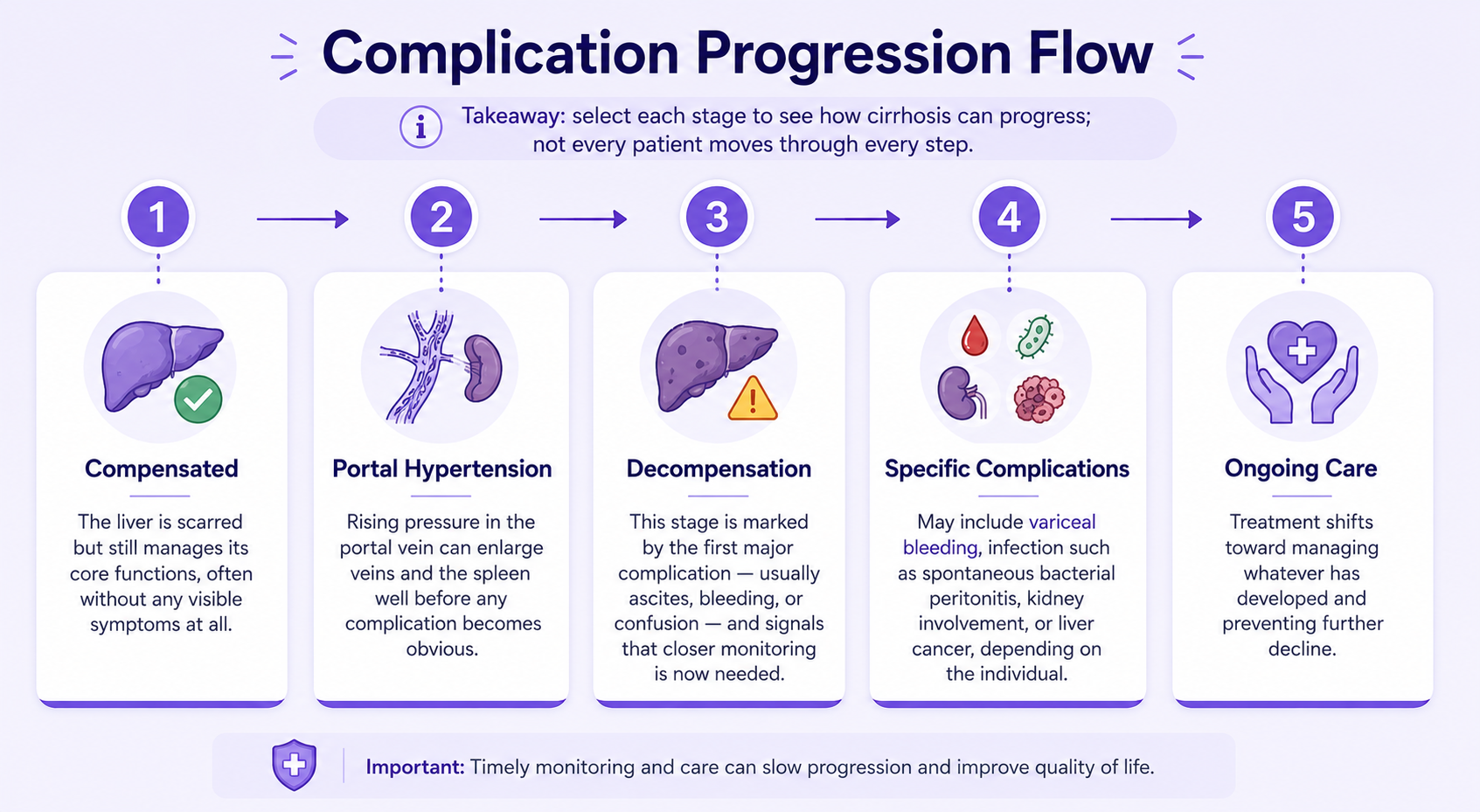
The possible complications cover a lot of ground fluid buildup, infections such as spontaneous bacterial peritonitis (infection of the fluid in the abdomen), bleeding from swollen veins in the food pipe, kidney strain, and, for some, liver cancer or liver failure. This is exactly where the line between compensated cirrhosis, with no major complications, and decompensated cirrhosis, where they’ve developed, shapes the outlook.
★ Quick note: keeping cirrhosis in the compensated stage is the single biggest aim of long-term care.
How Is Long-Term Cirrhosis Monitored?
Steady monitoring is the quiet work that keeps stable cirrhosis stable. Rather than waiting for something to go wrong, regular follow-up hunts for small shifts while they’re still easy to handle. In practice, that usually blends blood tests — checking liver function, a full blood count with platelets, and the kidneys — with imaging from time to time. There’s no universal schedule, though. The plan bends to fit each person’s cause, severity, complications, and general health.
Blood Test
Blood tests can assess liver and kidney function, blood counts and clotting.
Imaging
Imaging can examine the liver, spleen, blood vessels and abdominal fluid.
Surveillance
Cancer surveillance aims to find suspicious liver changes before symptoms appear.
Endoscopy
Endoscopy may be used to check for enlarged veins when clinically indicated.
Review
Nutrition, medicines, weight and muscle strength may be reviewed together.
Two scoring tools come up often in this conversation. The Child-Pugh and MELD scores don’t predict an individual’s future with certainty — they simply help a specialist track direction over time, alongside a FibroScan test between visits.
★ Quick note: the best monitoring plan is the one shaped around the individual, not a fixed checklist.
When Should Someone With Long-Term Cirrhosis Seek Urgent Medical Care?
Even after decades of calm, cirrhosis can turn quickly — and a handful of warning signs simply can’t wait. Some symptoms point to a genuine emergency and need immediate hospital care, not a call to book something for next week. They usually reflect serious trouble like internal bleeding, a spreading infection, or the brain effects of advanced liver disease, all of which do far better the sooner they’re treated. Spotting them early can make a real difference.
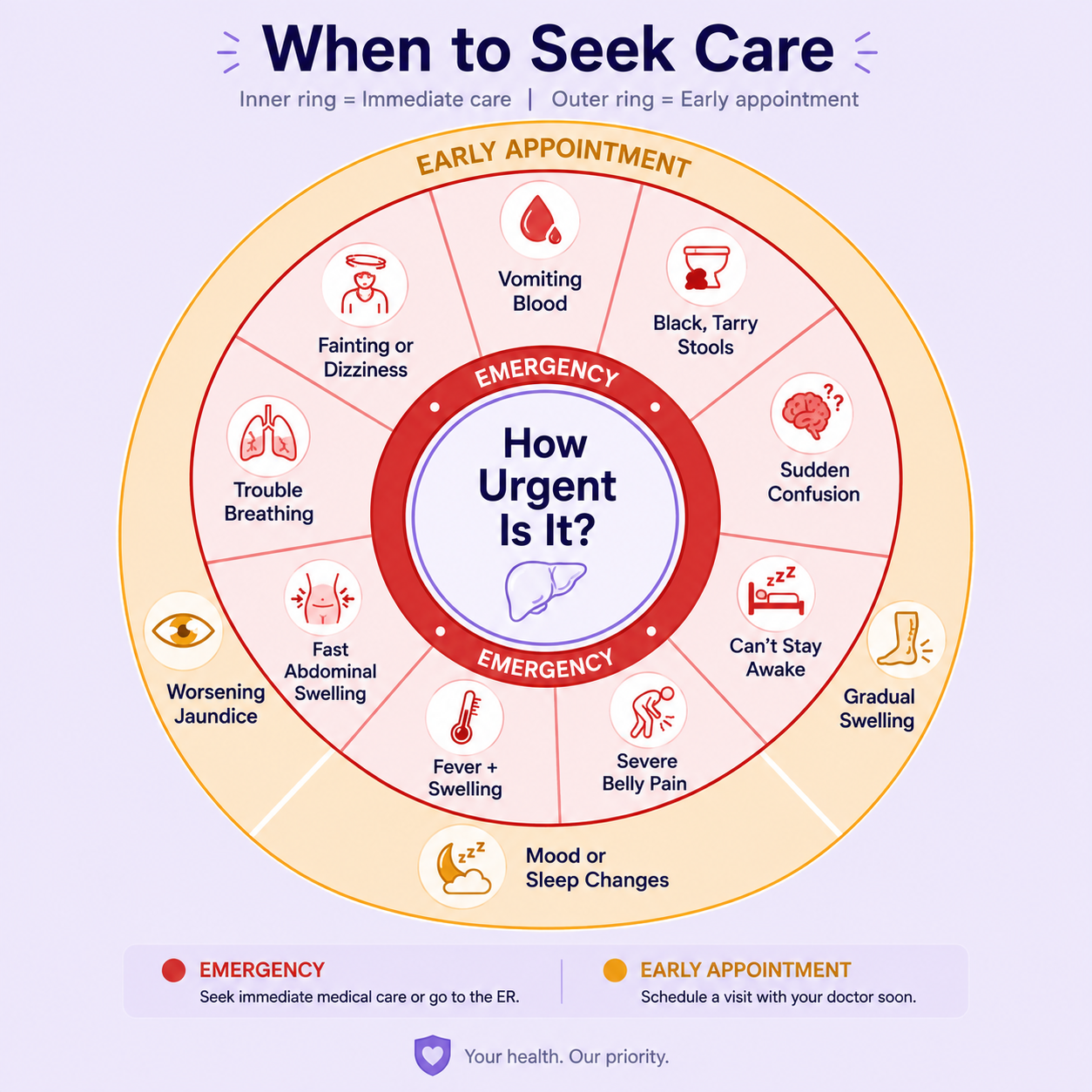
Other changes are less dramatic but still worth a prompt phone call rather than a dash to hospital — new or slowly deepening jaundice, swelling that creeps up over days, or mild confusion. The rule of thumb is easy enough to remember: anything sudden, severe, or fast-worsening means urgent care, while newer or milder changes mean reaching out to the treating team soon. And when it’s honestly hard to tell the two apart, getting checked quickly is never the wrong call.
★ Quick note: when a symptom is sudden or severe, it’s always safer to get checked than to wait and see.
FAQs
Can someone live with cirrhosis for 20 years?
Yes. Many people do, especially those with compensated cirrhosis whose underlying cause is well controlled. Long-term survival leans far more on liver function and whether complications have developed than on the length of time since diagnosis.
Does living with cirrhosis for 20 years mean the liver is failing?
Not at all. Reaching 20 years often points to a liver that has stayed relatively steady. On its own, it says nothing about failure — current liver function, kidney function, and the presence or absence of complications are what actually show how the liver is doing.
Can cirrhosis remain stable for many years?
It can. When the cause of the scarring is treated or removed and the liver stays in the compensated stage, cirrhosis can hold steady for a long time. Regular monitoring is what stops that stability from slipping unnoticed.
How often should someone with cirrhosis have liver tests and scans?
There’s no single schedule that fits everyone. Frequency depends on the cause, severity, and any complications, though many people have periodic blood tests and regular imaging for liver cancer surveillance. The treating specialist sets the right interval for each person.
When is a liver transplant considered?
A transplant usually comes into the conversation when cirrhosis becomes decompensated or liver function drops significantly, often guided by tools like the MELD score. It’s always assessed individually, weighing overall health, complications, and how the liver responds to treatment.