
Knowing that drinking has affected the liver and that fluid has built up in the stomach is a lot of information to digest. Alcohol-related cirrhosis with ascites is serious, but the next steps will not be the same for everyone. What happens next depends on the liver and kidney function of the patient now, their sobriety and the degree of attention given to controlling the complications.
“Ascites is often the first clear sign that cirrhosis has moved into a more advanced stage. What matters now is stopping further liver injury, assessing complications early and building a management plan around the person’s current health.” — Dr. Ksheetij Kothari, Gastroenterologist in Pune
What Causes Ascites in Alcoholic Cirrhosis?
The last link in the chain is the fluid. Alcohol damages the liver and blood can’t flow freely through the liver, which increases the pressure in the portal vein. Also, the scarred liver may make less of a protein that assists maintain fluid within blood vessels, called albumin.
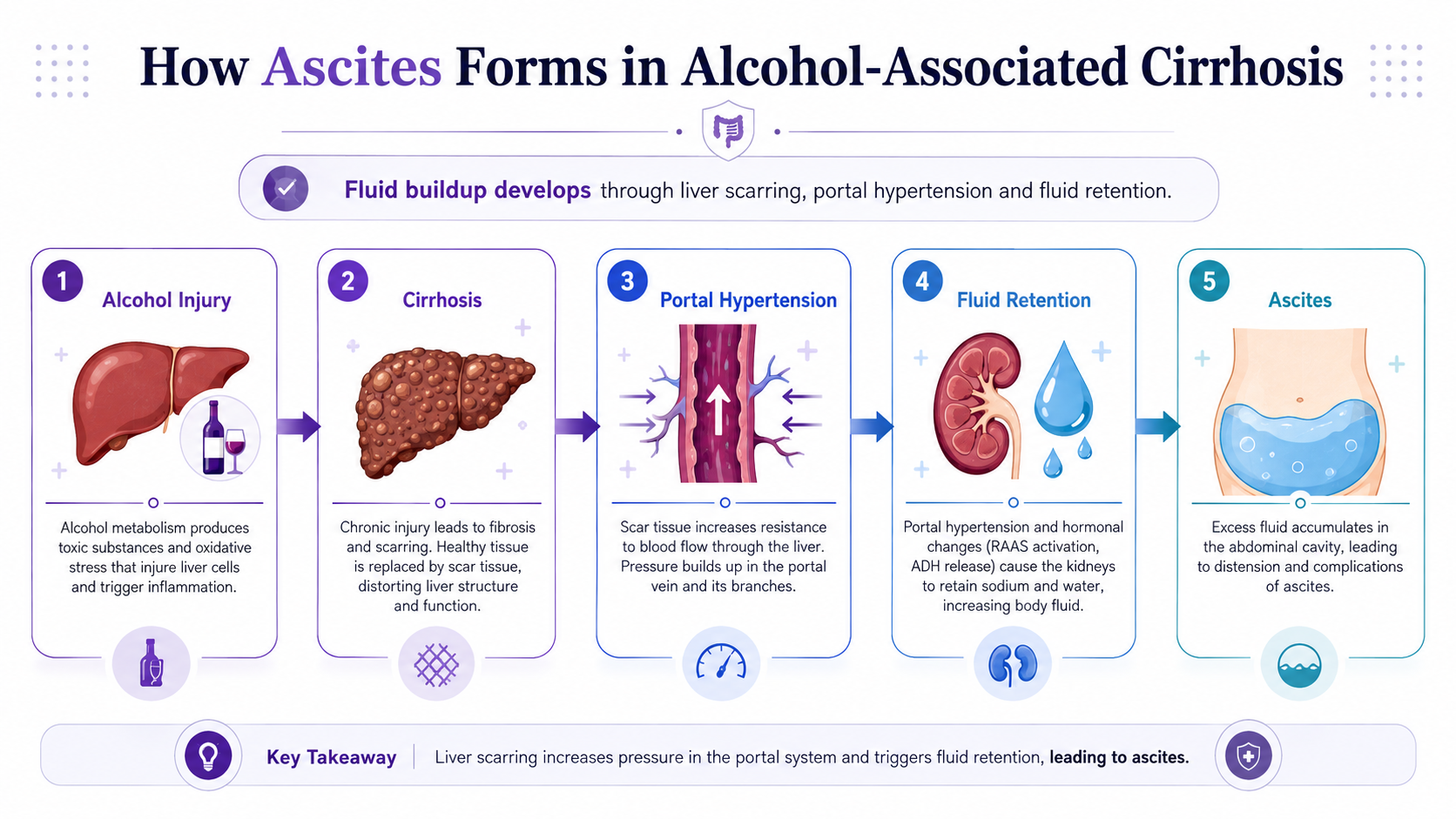
The kidneys also make matters worse by retaining salt and water in the body during fluid shifts. Treatment thus has multiple components: abstinence from alcohol, dietary sodium restriction, and prescriptive diuretics and monitoring kidney function and electrolytes.
Quick Note: Stopping alcohol is the most important step in preventing further alcohol-related liver injury.
Ready to break the cycle? Structured care can help manage ascites and protect the liver function that remains.
What Are the Signs and Symptoms of Ascites?
Ascites often creeps up slowly. A waistband feels tighter, the scale rises even though eating has not changed, and the abdomen begins to feel firm or heavy. As more fluid gathers, smaller meals may become filling and swollen ankles may appear.
Abdominal Swelling
Tap to read
A tight, distended abdomen that grows over days or weeks is the most recognisable sign.
Rapid Weight Gain
Tap to read
Unexpected weight can appear from fluid rather than a change in food intake
Acid reflux & ulcers
Tap to read
Acid Reflux (acid rising into the food pipe) and stomach ulcers can mimic gallbladder pain in the upper abdomen. These often existed before surgery but got blamed on the gallbladder.
Breathlessness
Tap to read
A tense abdomen can press upwards and make breathing harder, especially when lying flat.
Leg Swelling
Tap to read
Puffy ankles or lower legs often appear alongside abdominal fluid.
Liver & pancreas
Tap to read
Fatty liver, or occasionally irritation of the pancreas, sits close by and can refer pain to the right upper abdomen. Blood tests and scans help tell these apart.
Once the area affected by swelling gets tight, it can push in an upward manner and create difficulties in breathing, for instance, when lying flat. It is impossible to evaluate the amount of fluid on the basis of just one symptom. Several visible changes combined require being taken into consideration instead of adopting the wait-and-see policy.
Quick Note: A sudden rise in abdominal size or weight over a few days deserves prompt medical review.
How Is Alcoholic Cirrhosis With Ascites Diagnosed and Assessed?
Dr. Ksheetij Kothari completed his DM in Gastroenterology at St. John’s Medical College, Bangalore, with fellowships in Advanced Endoscopy and Endoscopic Ultrasound. Treatment intensity gets matched to how the disease is actually behaving in each patient rather than fitted to a standard protocol regardless of case.
Getting the sequence right, steroids first and then immunomodulators or biologics as needed, matters just as much as the medications themselves. Call 9765180181 to discuss a flare that needs proper management.
Examination
The examination checks for abdominal fluid, tenderness, leg swelling, jaundice and other signs of liver disease.
Ultrasound
Ultrasound can detect fluid and examine the liver, spleen and portal circulation.
Blood Tests
Blood tests assess liver function, kidney function, clotting, blood counts and sodium.
Ascitic Tap
Paracentesis removes a small fluid sample to test for infection and help confirm the cause.
Scoring
Child-Pugh and MELD scores may support assessment of disease severity.
Endoscopy
Endoscopy may be used to look for varices when clinically indicated.
When ascites is new or worse, paracentesis may be advised. A fluid sample can be tested for infection and analysed to help confirm portal hypertension as the cause. Endoscopy may also be considered when assessing varices.
Quick Note: Ascitic tap will help determine the cause, identify infection, and, if given as therapy, provide alleviation of a tense abdomen.
When Should You Consult a Gastroenterologist for Ascites?
If the belly becomes swollen for the first time in someone who has a history of alcohol consumption, they should seek advice from a specialist. If a person has fever and abdominal pain, or an abrupt severe abdominal distension, or is confused or vomits blood, or has dark stools or difficulty breathing, they should not postpone an appointment.
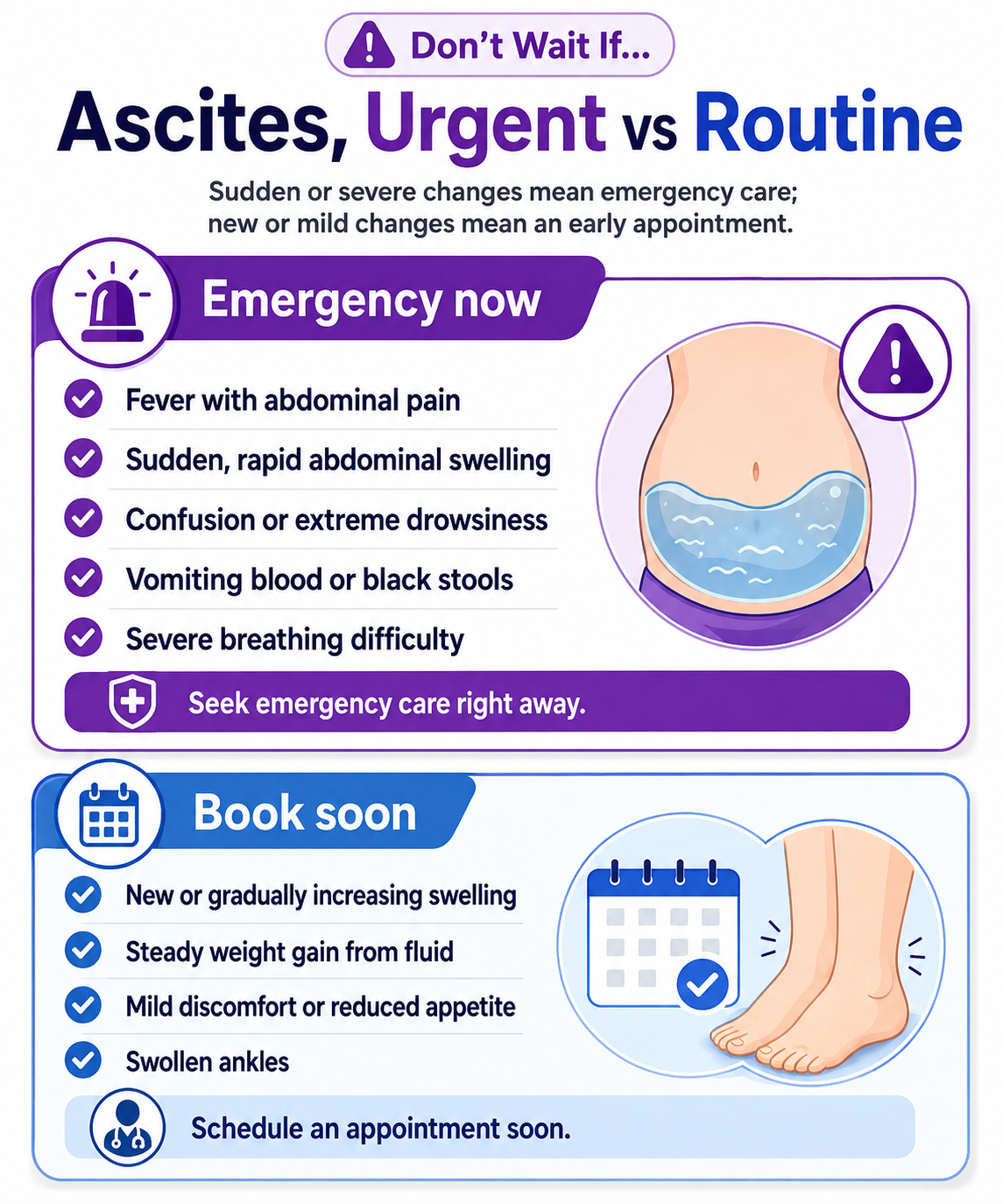
Outside an emergency, early review still matters. A gastroenterologist can assess the fluid, guide sodium intake, adjust diuretics, arrange drainage when needed and support alcohol cessation. Follow-up also helps catch infection, kidney problems and other complications before they escalate.
Quick Note: Sudden or severe symptoms need emergency care rather than the next available clinic slot.
Persistent or worsening swelling deserves ongoing specialist monitoring, not repeated self-treatment.Seek Assessment
FAQs
Can ascites in AAC be reversed?
Improving the liver disease itself, reducing sodium intake and, if necessary, stopping drinking can often improve ascites. How effective it is will depend on how much liver and kidney function is left and if there are other complications.
In alcoholic cirrhosis, what is the severity of ascites?
Ascites is a sign of decompensated cirrhosis and needs close medical care. Not always the worst case scenario, but could require more tracking and customized care.
Can someone be suffering from cirrhosis and ascites for years?
Others do stabilize for extended periods of time, especially those who are not drinking alcohol and when their issues are dealt with. However, the prognosis is not always determined by the presence of ascites, and depends on the liver and kidney functions of the patient, as well as the presence of infection and the patient’s reaction to treatment.
Can you stop drinking when you have ascites?
Yes. Avoidance of alcohol cessation is the main component of alcohol management as it prevents further alcohol-related injury. Medical assistance may be necessary because it is possible that a person who is physically dependent may not be safe to withdraw from suddenly.
Medical Sources:
- Diagnosis, Evaluation and Management of Ascites, Spontaneous Bacterial Peritonitis and Hepatorenal Syndrome — American Association for the Study of Liver Diseases
- Management of Ascites, Volume Overload, and Hyponatremia in Cirrhosis — American Gastroenterological Association