
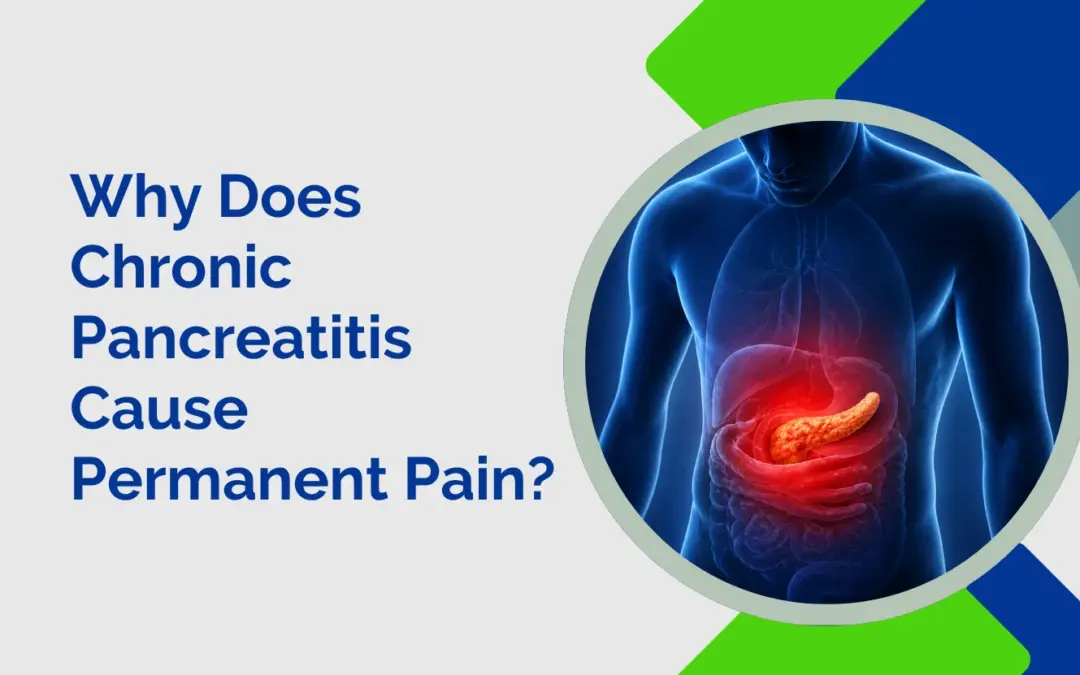
Chronic pancreatitis leaves lasting structural damage to the pancreas. The pain often starts as occasional flare-ups but can turn constant and disabling as inflammation, scarring, and changes in the pancreatic ducts affect nearby nerves. Because this damage is structural, treatment focuses on managing pain and reducing pressure rather than reversing the underlying condition. Because this damage is structural, treatment aims to manage the pain rather than reverse it.
According to Dr. Ksheetij Kothari, recognized as one of the Best Gastroenterologist in Pune, “Patients often expect this pain to settle down eventually, the way it used to. Once the pancreas has scarred, it usually takes an active management plan, not just time, to get ahead of it.”
How Does Chronic Pancreatitis Actually Damage the Pancreas?
This condition doesn’t appear overnight. It builds slowly through repeated injury.
Repeated inflammation causes fibrosis: Each flare-up leaves scar tissue behind. Enough flare-ups over time replace healthy pancreatic tissue with tissue that can’t function properly.
Alcohol remains the leading cause: Long term heavy drinking is behind most cases. Gallstones and inherited factors play a role in others.
Duct changes worsen the cycle: Scarring narrows or blocks the pancreatic duct. That blockage on its own can spark more inflammation and pain.
Nerve involvement adds another layer: Ongoing inflammation can trap or sensitize nearby nerves. This is part of why pain sometimes spreads to the back and gets harder to control.
Diagnosis usually needs imaging along with a detailed symptom history. Pancreatitis treatment starts by mapping out how far the damage has gone before deciding on a plan.
What Does Chronic Pancreatitis Pain Management Actually Involve?
No single treatment usually solves this. Pain management tends to combine a few approaches.
Medication forms the first line: Doctors typically start with milder pain relievers. Stronger options come into play only if the milder ones fall short.
Enzyme supplements can indirectly help: Replacing pancreatic enzymes improves digestion. That eases some of the strain eating puts on a pancreas already under stress.
Endoscopic procedures address structural issues: Stones or narrowed sections of the duct can often be cleared endoscopically. This avoids the need for open surgery.
Surgery remains an option for severe cases: When other treatments don’t work, including cases with significant nerve involvement, surgery can relieve pressure or remove pancreatic tissue too damaged to recover.
Recognizing acute episodes early matters, since they shape how this condition progresses. Our piece on acute pancreatitis warning signs covers what to watch for before the damage turns permanent.
Why Choose Dr. Ksheetij Kothari?
Dr. Ksheetij Kothari completed his DM in Gastroenterology at St. John’s Medical College, Bangalore, with fellowships in Advanced Endoscopy and Endoscopic Ultrasound. His approach to chronic pancreatitis starts with pinpointing exactly how far the disease has advanced. The right treatment depends entirely on that stage. Instead of applying one fixed protocol to every patient, he combines medical, endoscopic, and nutritional strategies based on what each case actually calls for.
Persistent upper abdominal pain deserves a real diagnostic workup, not just a stronger prescription. Call 9765180181 to get it evaluated.
Dealing with upper abdominal pain that just won’t let up? Book an appointment to find out whether chronic pancreatitis is behind it.
FAQs
Can chronic pancreatitis pain go away completely?
Rarely. The underlying damage to the pancreas is usually permanent.
What does chronic pancreatitis pain management typically include?
Medication, enzyme supplements, and sometimes endoscopic or surgical treatment.
What's the main cause of chronic pancreatitis?
Long term alcohol use is the most common underlying cause.
Can chronic pancreatitis lead to diabetes?
Yes. Over time the pancreas loses its ability to produce insulin.
References:
- NCBI Bookshelf (StatPearls) — Chronic Pancreatitis: https://www.ncbi.nlm.nih.gov/books/NBK482325/
- NIDDK (NIH) — Treatment for pancreatitis: https://www.niddk.nih.gov/health-information/digestive-diseases/pancreatitis/treatment
Disclaimer
This blog is for educational purposes only and isn’t a substitute for professional medical advice; consult a qualified doctor for any symptoms or concerns.