
Medically Reviewed by Dr. Ksheetij Kothari, MBBS, M.D (Medicine), D.M (Gastroenterology)
For most people, diabetes shows up on its own, tied to weight, genetics, or age. But every so often, it works the other way around: the diabetes shows up first, and a pancreatic tumor is found later. It’s not the usual story, and it doesn’t apply to most people newly diagnosed with diabetes. Still, knowing when a new diabetes diagnosis deserves a second look, rather than just a prescription, can make a real difference.
“New-onset diabetes after the age of 50, especially without the usual risk factors, isn’t something to dismiss as routine. In a small number of cases, it can be the pancreas signaling that something else is going on.” — Dr. Ksheetij Kothari, Gastroenterologist in Pune
What Causes Diabetes in People With Pancreatic Cancer?
The pancreas has two jobs to do at once: producing digestive enzymes and making insulin, the hormone that keeps blood sugar in check. When a tumor grows within that same organ, it can interfere with nearby insulin-producing cells well before it’s large enough to cause pain or show up clearly on a scan. This isn’t the usual type 2 diabetes patients are used to hearing about. Doctors refer to it as type 3c, or pancreatogenic diabetes, and pancreatic cancer is behind a meaningful share of these cases.
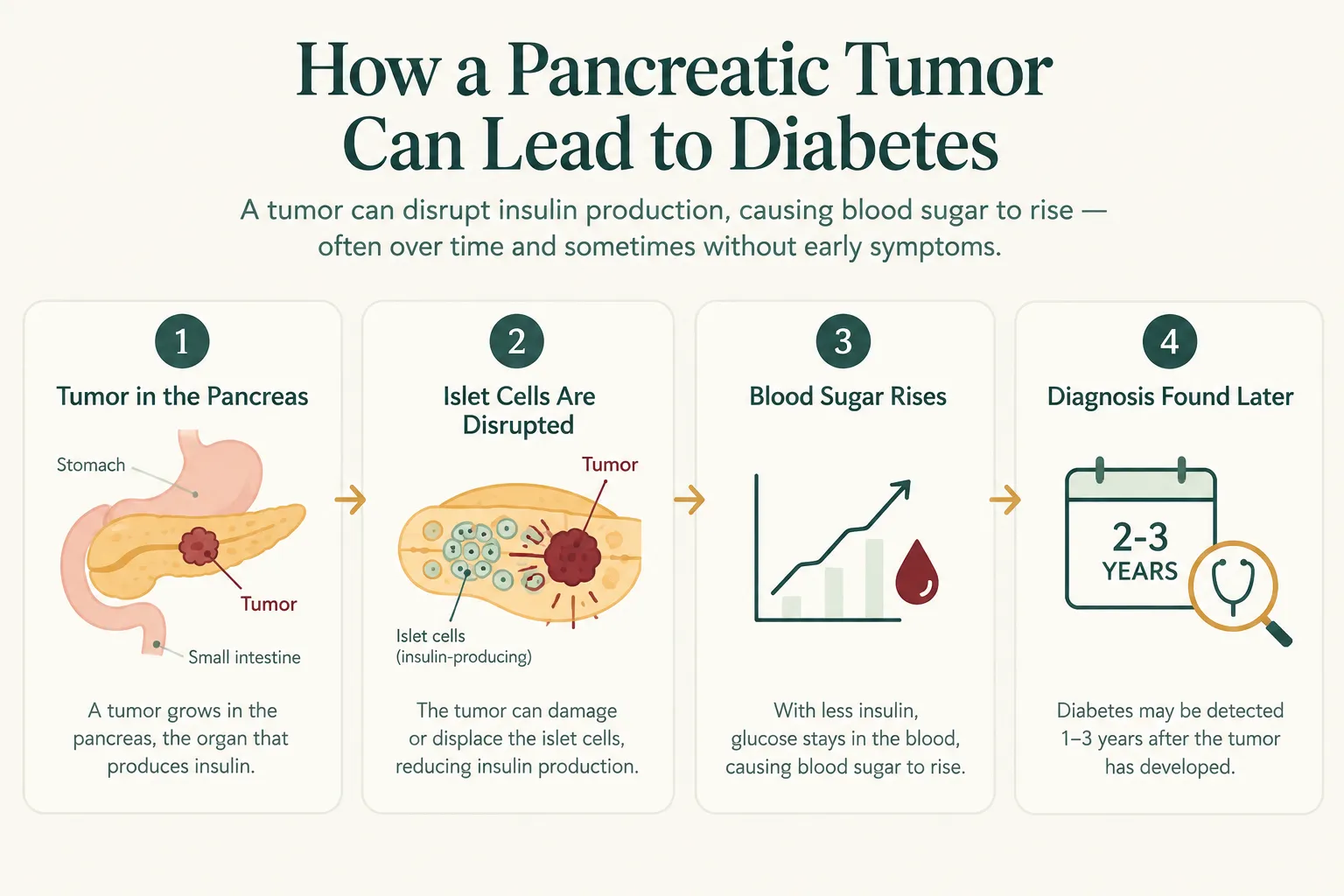
Timing is really what sets this apart. Current research points to the tumor releasing signals that impair insulin-producing cells directly, rather than the more familiar issue of the body resisting insulin it already makes. This helps explain why type 3c diabetes often doesn’t respond well to standard type 2 medications or diet changes on their own. Just as notably, it tends to appear two to three years before a cancer diagnosis rather than after — one reason doctors have started paying closer attention to when diabetes develops, not only whether it has.
Quick Note: Having diabetes doesn’t mean someone has, or will develop, pancreatic cancer. The vast majority of new diabetes diagnoses have nothing to do with the pancreas at all — it’s the combination of factors, not diabetes alone, that matters.
If a new diabetes diagnosis doesn’t fit the usual pattern, it may be worth a closer look at the pancreas itself.
What Are the Signs of Diabetes Linked to Pancreatic Cancer?
At first glance, new diabetes doesn’t look unusual at all — more thirst, more bathroom trips, blurred vision, a tiredness that sleep doesn’t seem to fix. What sets the pancreatic-cancer-linked version apart isn’t any one symptom on its own, though, but the company it tends to keep. Weight loss appearing alongside a new diabetes diagnosis, particularly without any change in diet or activity, is one combination doctors watch closely, along with a shrinking appetite and a vague ache somewhere in the upper abdomen.
Increased Thirst
Drinking noticeably more than usual, without a clear reason.
Frequent Urination
More trips to the bathroom, especially overnight.
Unexplained Weight Loss
Losing weight without changes to diet or activity — a key combination with new diabetes.
Persistent Fatigue
Tiredness that doesn’t lift with rest or sleep.
Reduced Appetite
Eating less without actively trying to — another flagged combination.
Upper Abdominal Discomfort
A mild, hard-to-place ache, often easy to dismis
To be clear, this doesn’t mean every fresh diabetes diagnosis calls for a cancer workup — most simply don’t. Age plays a role too: new-onset diabetes after 50, especially in someone without the usual risk factors such as excess weight or a family history, is what tends to raise a flag. It’s the pattern as a whole — new diabetes, unexplained weight loss, and a profile that doesn’t quite fit typical type 2 that turns a routine finding into something worth discussing further.
How Is Diabetes Managed During Pancreatic Cancer Treatment?
Keeping blood sugar steady during pancreatic cancer treatment takes a different approach than everyday diabetes management. Chemotherapy often affects appetite and brings on nausea, both of which can make glucose levels swing more than usual. Steroids, commonly used alongside chemotherapy to control sickness, can send blood sugar up sharply for a few days at a stretch. For this reason, monitoring usually becomes more frequent, and care is typically coordinated between an endocrinologist and the oncology team rather than left to one doctor alone.
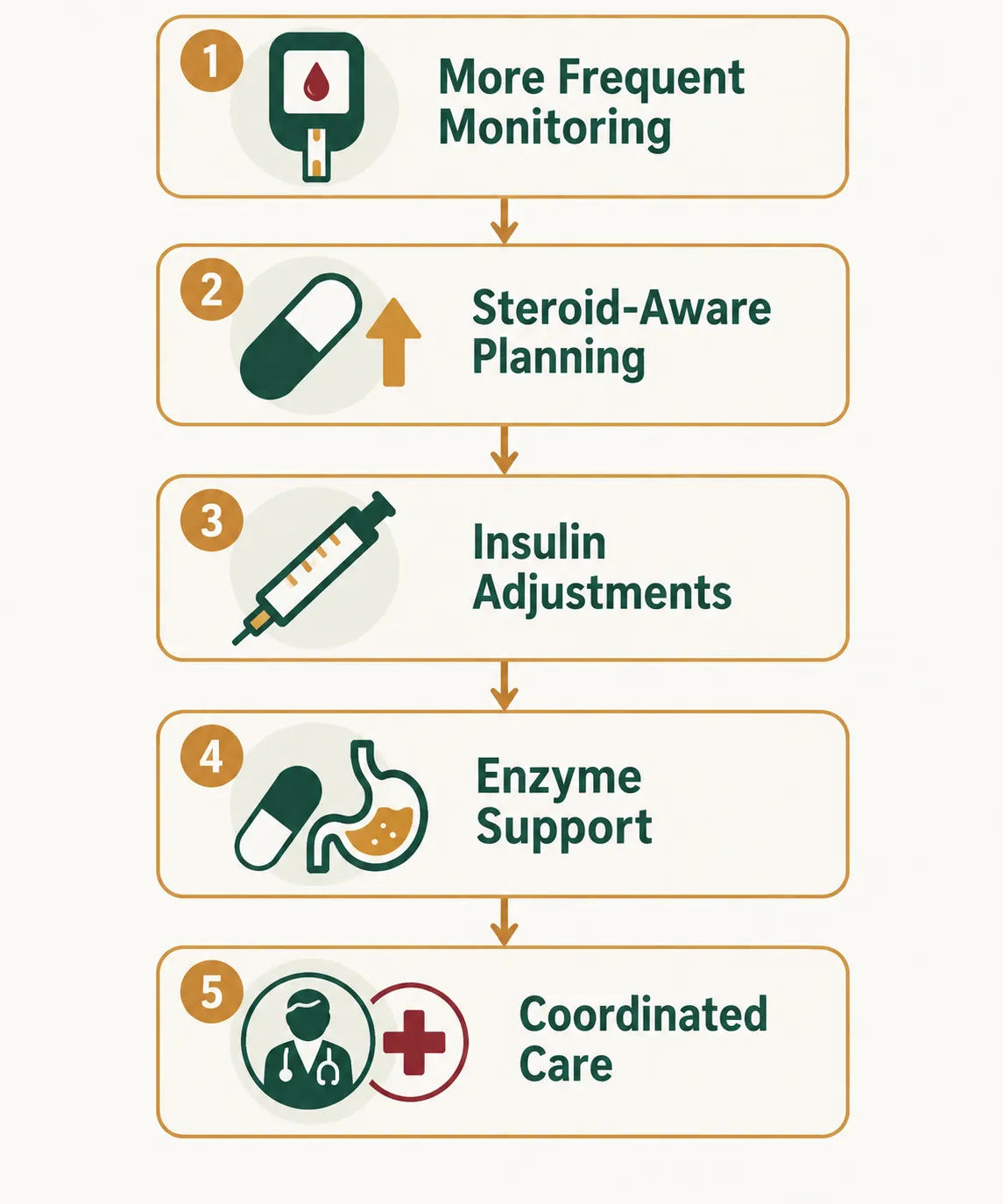
Insulin often becomes necessary, even for people who managed well on tablets before, simply because the pancreas’s own capacity to produce it keeps shifting. Enzyme supplements may also be added, since the same tumor affecting insulin can affect digestion, and that in turn changes how the body absorbs sugar from food. None of this works well as guesswork. Small, frequent adjustments guided by regular blood sugar checks tend to hold up far better than any fixed, one-size plan.
Managing diabetes alongside a pancreatic condition works best with a team who understands both sides of it.
When Should You Consult a Doctor About New-Onset Diabetes?
A new diabetes diagnosis after 50, especially alongside unexplained weight loss, ongoing fatigue, or a dull ache in the upper abdomen or back, is worth mentioning to a doctor rather than chalking up to age. On its own, this combination proves nothing, but it’s exactly the pattern that prompts further testing, sometimes with an ERCP or similar procedure. Jaundice — a yellowing of the skin or eyes — showing up around the same time is a stronger signal and shouldn’t be set aside.
See a Doctor Soon
- New diabetes diagnosis after age 50
- Unexplained weight loss
- Ongoing fatigue
- Dull ache in the upper abdomen or back
- Jaundice (yellowing skin or eyes
Seek Emergency Care
- Extreme thirst with vomiting
- Fruity-smelling breath
- Confusion or trouble staying alert
- Fast or labored breathing
- Shakiness, sweating, sudden confusion
Separate from all this, certain symptoms call for same-day emergency care no matter the underlying cause. Extreme thirst paired with vomiting, breath with a fruity odor, confusion, or fast breathing can point to diabetic ketoacidosis, while shakiness, sweating, and sudden confusion can mean dangerously low blood sugar. Both situations are genuine emergencies. It helps to hold onto the distinction: gradual, unusual changes deserve a proper appointment, while sudden, severe symptoms belong in an emergency room.
Key Takeaway
New-onset diabetes after 50 — especially with unexplained weight loss — is worth a closer look, not because it usually means pancreatic cancer, but because catching the rare case early matters.
FAQs
Can pancreatic cancer really cause diabetes?
Yes, though it’s not the usual scenario. In a portion of pancreatic cancer cases, a tumor in the pancreas disrupts insulin production before the cancer itself is diagnosed, leading to what’s known as type 3c, or pancreatogenic, diabetes.
Does everyone with new diabetes need to be screened for pancreatic cancer?
No. The large majority of new diabetes diagnoses are unrelated to pancreatic cancer. Closer evaluation is generally reserved for new-onset diabetes after age 50, especially alongside unexplained weight loss or other red-flag symptoms.
What is type 3c diabetes?
Type 3c diabetes, also called pancreatogenic diabetes, develops when damage to the pancreas — from cancer, chronic pancreatitis, or surgery affects the cells that produce insulin. It’s frequently mistaken for type 2 diabetes at first.
How soon before a cancer diagnosis does diabetes typically appear?
Research suggests hyperglycemia often appears roughly two to three years before a pancreatic cancer diagnosis, which is part of why new-onset diabetes is being studied as a possible early warning sign.
Can diabetes from pancreatic cancer be controlled with diet and exercise alone?
Usually not on its own. Because type 3c diabetes involves reduced insulin production rather than insulin resistance, most people need medication, and many eventually need insulin, alongside any lifestyle changes.
References:
- “Diabetes and Pancreatic Cancer: What Is the Link?” — UT MD Anderson Cancer Center
- “Diabetes With Pancreatic Cancer” — Pancreatic Cancer UK