
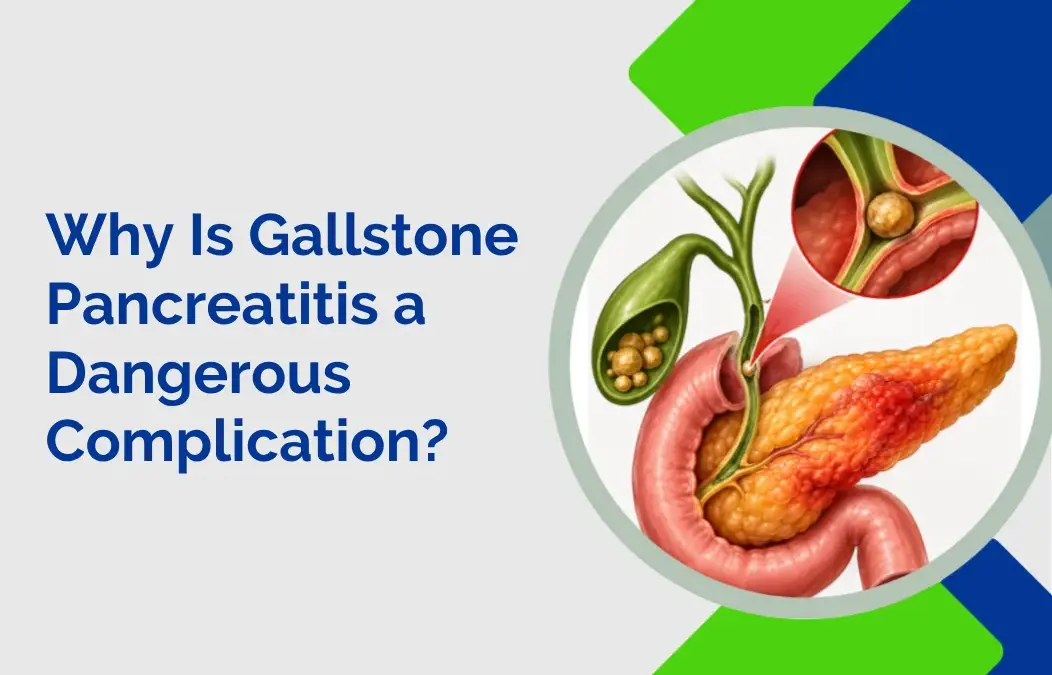
A single gallstone slipping out of the gallbladder can set off far more trouble than it looks like at first. It lodges in the shared duct near the pancreas. Digestive enzymes back up behind it and start attacking the pancreas itself. A stone the size of a grain of rice can turn into a medical emergency within hours.
According to Dr. Ksheetij Kothari, recognized as one of the best Gastroenterologist in Pune, “Gallstone pancreatitis isn’t something to wait out at home. The window between mild symptoms and a serious complication can close fast.”
What Are the Symptoms of Gallstone Pancreatitis?
Gallstone pancreatitis symptoms tend to come on fast. They don’t build up gradually.
Sudden upper abdominal pain: severe pain in the upper belly, often spreading straight through to the back, is usually the first sign anyone notices.
Nausea and repeated vomiting: the pain rarely shows up on its own, and vomiting that doesn’t bring relief tends to follow soon after.
Fever and a rapid pulse: these signal inflammation, and sometimes infection too, both of which push the situation into urgent territory.
Jaundice in more serious cases: yellowing of the skin or eyes can mean the bile duct is still blocked and not just the pancreatic one.
Gallstone disease rarely stays quiet once it reaches this point. Gallstone disease here gets treated as an emergency rather than penciled in for a routine follow up.
Why Does Gallstone Pancreatitis Need Urgent Treatment?
Waiting a few days is not a safe option with this condition.
Enzyme buildup can damage the pancreas quickly: digestive enzymes activate inside the organ instead of the intestine and start breaking down pancreatic tissue almost immediately.
Untreated blockage raises the risk of infection: trapped bile and enzymes create conditions where bacteria can take hold. Sepsis is a real possibility if this goes unaddressed.
Severe cases can affect other organs: in the worst scenarios inflammation spreads well past the pancreas and starts affecting the lungs or kidneys.
Removing the gallbladder usually follows recovery: once the acute episode settles most patients need the gallbladder taken out so it doesn’t happen again.
Gallstones are only one of several pancreatitis causes worth knowing about. Our piece on chronic pancreatitis pain looks at what happens when damage from repeated attacks never fully resolves.
Why Choose Dr. Ksheetij Kothari for Gallstone Pancreatitis?
Dr. Ksheetij Kothari completed his DM in Gastroenterology at St. John’s Medical College Bangalore. He holds fellowships in Advanced Endoscopy and Endoscopic Ultrasound. With gallstone pancreatitis his focus is confirming the blockage quickly through imaging and endoscopic ultrasound since timing matters just as much as getting the diagnosis right. Coordination with surgical teams for gallbladder removal happens as part of the same plan rather than a separate referral down the line.
Gallstone pancreatitis doesn’t wait for a convenient appointment slot. Call 9765180181 for urgent evaluation.
Sudden severe abdominal pain along with nausea or vomiting?
FAQs
What are the symptoms of gallstone pancreatitis?
Severe upper abdominal pain along with nausea, vomiting, fever, and sometimes jaundice.
How serious is gallstone pancreatitis?
Very serious. It’s treated as a medical emergency needing immediate hospital care.
How does a gallstone cause pancreatitis?
It blocks the shared duct so enzymes get trapped and inflame the pancreas.
Is surgery needed for gallstone pancreatitis?
Usually yes. Gallbladder removal typically follows once the acute episode has settled.
References:
- NCBI Bookshelf (StatPearls) — Gallstones: https://www.ncbi.nlm.nih.gov/books/NBK459370/
- NCBI Bookshelf (StatPearls) — Acute Pancreatitis: https://www.ncbi.nlm.nih.gov/books/NBK482468/
Disclaimer
This blog is for educational purposes only and isn’t a substitute for medical advice. Seek emergency care for severe abdominal pain.