
Medically Reviewed by Dr. Ksheetij Kothari, MBBS, M.D (Medicine), D.M (Gastroenterology)
Being told there’s a fluid collection near the pancreas after acute pancreatitis can be unsettling, but it’s usually less serious than it sounds. Many collections clear up by themselves, and only a minority need treatment. What matters is the type. A simple pocket of fluid and a collection packed with dead tissue behave very differently, and that decides how closely it’s followed and whether it ever needs draining.
“A fluid collection after pancreatitis isn’t one single problem. Its type, what’s inside it, and how mature it is decide whether it only needs watching or needs treatment.” — Dr. Ksheetij Kothari, Gastroenterologist in Pune
What Symptoms Can Pancreatic Fluid Collections Cause?
A lot of collections do not show any symptoms and can only be discovered during imaging done when a person has the condition or post-illness. When symptoms do appear, they typically occur as a dull pain in the upper belly and, at times, even the back. The pain can occur with bloating, nausea, and decreased appetite. A big collection may affect the stomach, resulting in a full feeling even after eating very little.
Dull Upper Abdominal Pain
Tap to read
Sometimes reaching through to the back, and growing as the collection does.
Bloating and Nausea
Tap to read
Often arrive together with a poor appetite.
Early Fullness
Tap to read
A large collection can press on the stomach, leaving less room for food.
Repeated Vomiting
Tap to read
Can occur when a collection presses on the stomach or small intestine.
Jaundice
Tap to read
Yellowing of the skin and eyes, which can happen when the bile duct is squeezed.
Fever and Chills
Tap to read
Point toward infection of the collection and need prompt assessment.
A collection can also lean on its neighbors. Squeezing the bile duct can cause jaundice, a yellowing of the skin and eyes, and pressing on the stomach or small intestine can bring on repeated vomiting. Fever and chills point toward infection. Pain or vomiting that returns a few weeks after pancreatitis is worth reporting, since it can mean the collection is changing.
Quick Note: Most fluid collections resolve on their own. Finding one doesn’t mean treatment is coming, only that it needs to be followed.
Can Pancreatic Fluid Collections Cause Complications?
While collections typically do not create significant issues, doctors are particularly concerned about infection. Bacteria that live in the intestines may enter the tissues, which can trigger fever and severe pain as well as other complications such as sepsis. Additionally, various collections may obstruct the stomach outlet or bile duct, which may result in vomiting or jaundice.
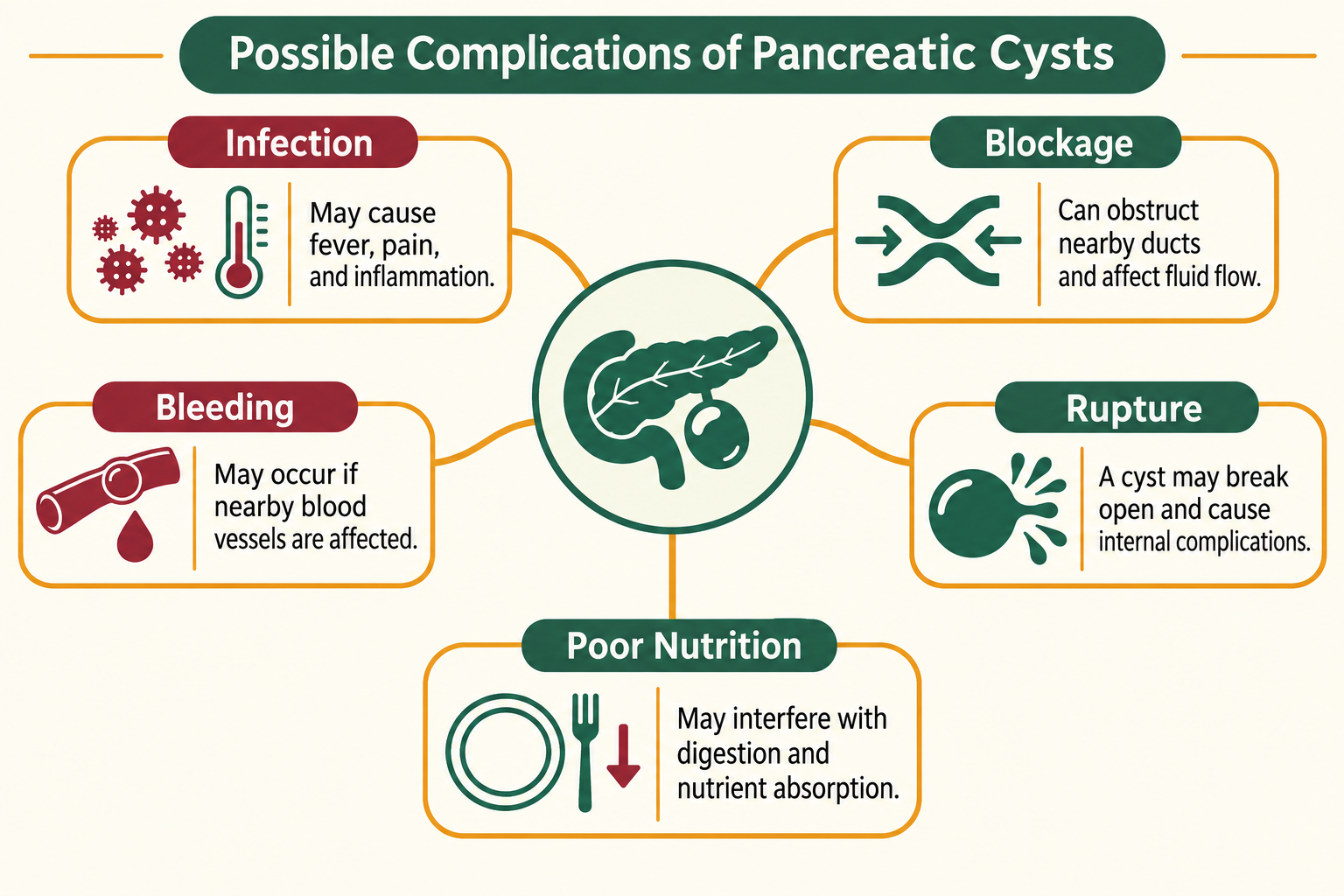
Less often, a collection bleeds or bursts. Inflammation can wear through a nearby artery and form a pseudoaneurysm, a weak, ballooning spot in the vessel wall, and a rupture can spill pancreatic fluid into the abdomen. Both are uncommon but serious, which is why large or symptomatic collections are followed closely. Collections that linger can also erode nutrition, as eating becomes uncomfortable and weight drifts down.
How Are Pancreatic Fluid Collections Treated?
Treatment typically involves monitoring alone. No symptoms, no infection” is followed by repeat imaging, and for many, a wait is sufficient; for the others, pain relief and good nutrition keep them going. Drainage is used when symptoms continue, infection occurs or complications are experienced from collections. Doctors wait, unless infection compels it, until the wall is mature, typically four weeks later.
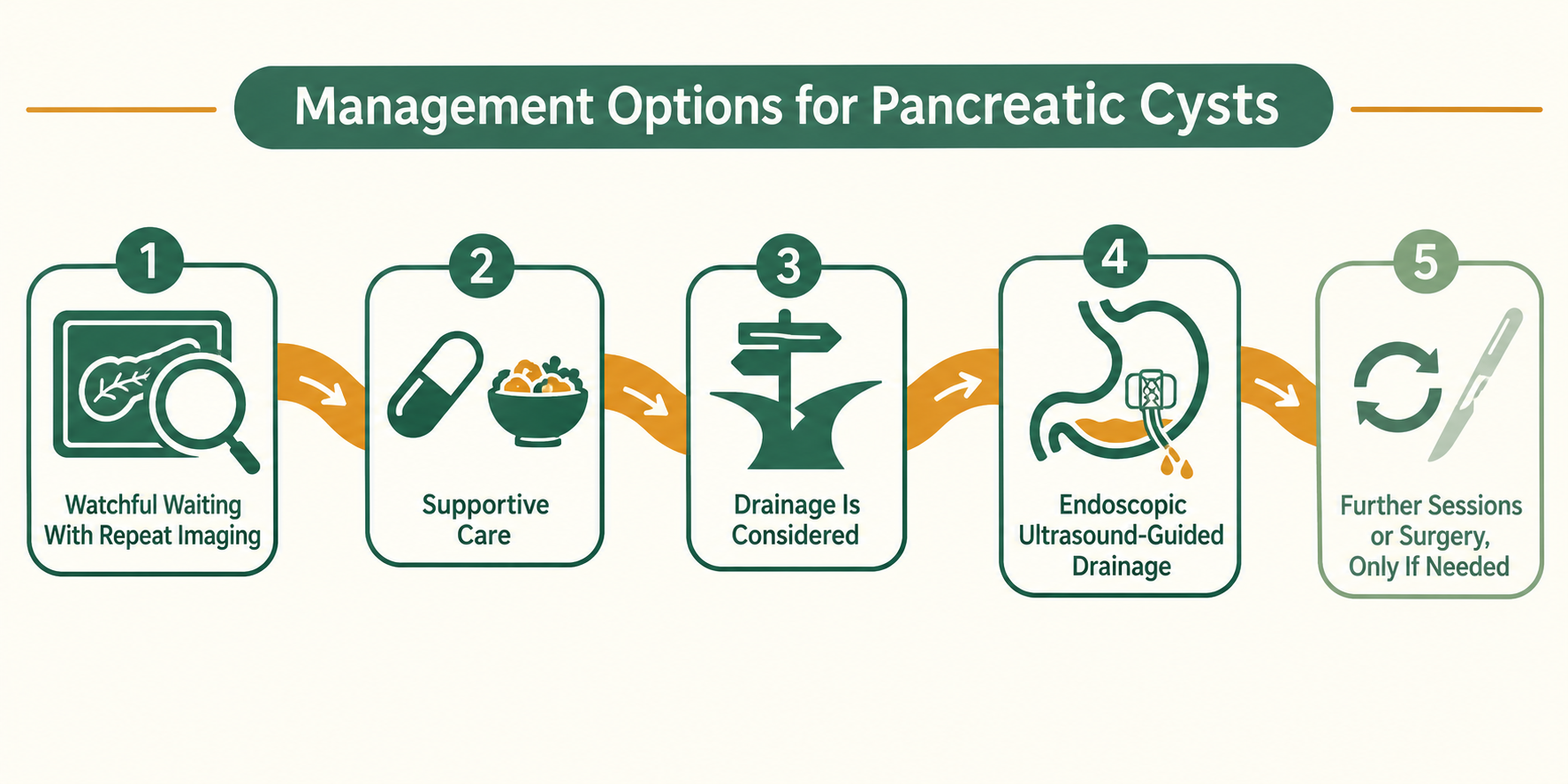
If drainage is required it is typically performed endoscopically. The doctor uses endoscopic ultrasound to make a small opening in the stomach into the collection and then inserts a stent to allow the contents to flow into the digestive tract. When there is walled-off necrosis, a lumen apposing metal stent, which is a wide metal stent that keeps the channel open, is usually used and dead tissue can be removed in subsequent sessions. Endoscopy is reserved for patients that cannot be treated with skin drainage or surgery.
When Should You Consult a Doctor?
Even if a person feels well following pancreatitis, he or she should continue to have follow-up scans because collections can change silently. Any return of pain, loss of appetite, vomiting, getting full soon, significant weight loss or yellowing of the skin or eyes is worthy of reporting as this may indicate that the collection is increasing or pushing against a close object
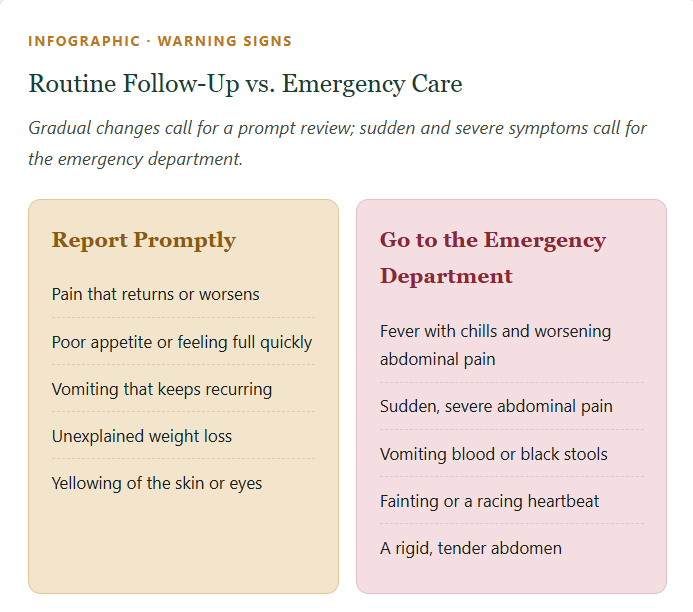
There are symptoms that necessitate a visit to the ER. Fever, chills and increased abdominal pain could be symptoms of infection. If pain suddenly comes, blood vomiting, black stools, faint, fast pulse or rigid, painful tummy might indicate bleeding or rupture. Occasionally, these can occur and are very serious, causing patients to be seen the same day: sudden, severe pain and fever or collapse.
Key Takeaway
A fluid collection after pancreatitis is common and often settles by itself, but its type, symptoms, and any sign of infection decide whether it needs only watching or treatment.
Medical Disclaimer: This article is intended strictly for informational purposes and does not constitute professional diagnosis. The type of pancreatic fluid collection will differ for each patient and can only be diagnosed or treated by a qualified physician.
FAQs
What's the difference between pseudocyst and walled-off necrosis?
They both have walls surrounding them, and are typically identifiable after approximately 4 weeks. Solid particles of dead pancreatic tissue are present in walled off necrosis, which may require a more complex treatment regimen, while pseudocyst is just fluid.
Would you treat all fluid collections in the pancreas?
No. Most of them take their place spontaneously. Treatment is not required for most collections where symptoms and infection do not occur and for those collections that no complications such as blockage or bleeding.
When does the fluid collection form after pancreatitis?
Early collections can start to occur within the first four weeks. The shapes that are walled off are typically only seen after recovery, typically weeks or months later.
Does an inflammation in the pancreatic fluid pass away without treatment?
Yes, there are many such as early collections which have only fluid. Repeat scans indicate a collection’s growth, stability, and/or decline.
Is surgery always needed to drain a collection?
No. If it is indicated to drain, then the first procedure should now be endoscopic drainage under ultrasound guidance. Surgery is kept for cases where less invasive methods aren’t suitable or haven’t worked.
What would be the indications of an infected fluid collection?
Symptoms include fever, chills, worsening abdominal pain or a general feeling of feeling unwell. Assess the infection early as this can change the treatment and its timing.
Medical Sources
- “Endoscopic Management of Acute Necrotizing Pancreatitis: ESGE Evidence-Based Multidisciplinary Guidelines” — Endoscopy (European Society of Gastrointestinal Endoscopy)
- “Clinical Practice Guidelines for the Endoscopic Management of Peripancreatic Fluid Collections” — PubMed Central