
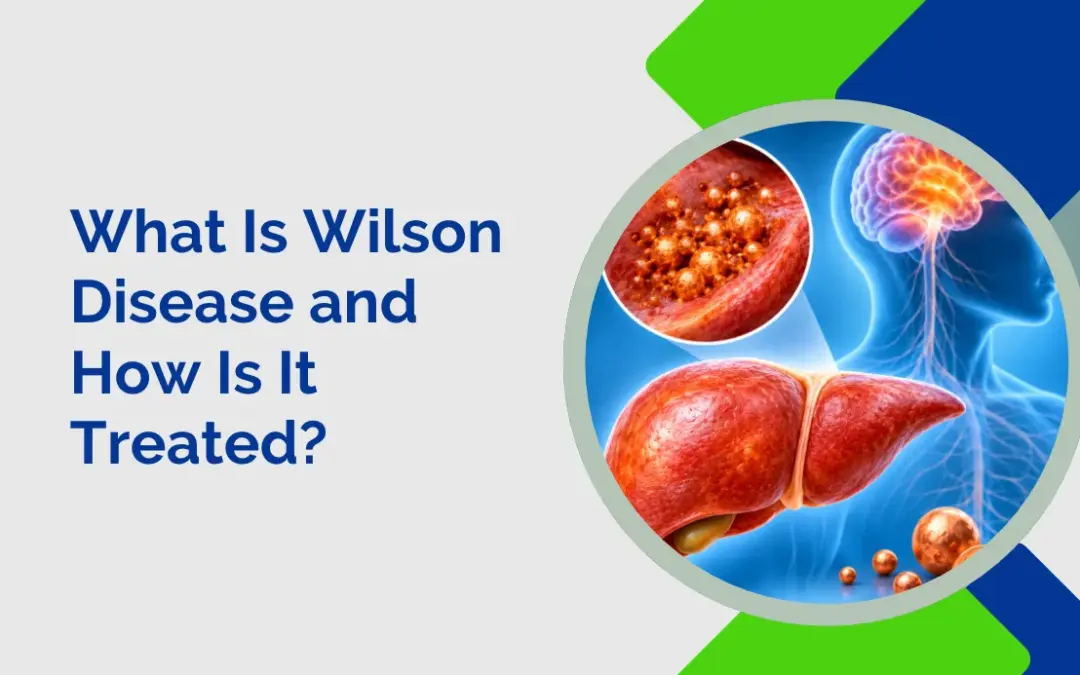
Wilson disease is a rare inherited disorder in which excess copper builds up in the body. A mutation in the ATP7B gene means the body can’t clear extra copper, so it collects in the liver first and later in the brain, eyes and kidneys. The liver is usually the first organ to suffer, which is why doctors manage it within gastroenterology and hepatology, often alongside neurology. About 1 in 30,000 people have it.
According to Dr. Ksheetij Kothari, a gastroenterologist in Pune, “Wilson disease is easy to miss because it can pass for many other liver or nerve problems. In a young person with unexplained liver trouble, it’s worth checking for.”
What Causes Wilson Disease?
Wilson disease is genetic, so nothing in diet or lifestyle causes it. A person is born with the condition.
Mutation in the ATP7B gene: This gene helps make a protein that moves extra copper from the liver into bile. A mutation disrupts this process, causing copper buildup.
One copy from each parent: A child needs two faulty copies to be affected. Parents with one copy are usually healthy carriers.
Copper piles up in the liver: With no way out, copper builds up until the liver can’t hold any more. The damage starts there.
Then it spreads: The extra copper leaks into the blood and settles in the brain, eyes and kidneys.
Blood, urine and gene tests can confirm the diagnosis once it’s suspected. Ongoing care for the condition is covered under Wilson disease treatment.
What Are the Symptoms of Wilson Disease?
Symptoms usually start between childhood and the age of 40. The liver is often affected first, though some people show nerve or mood changes instead.
Liver trouble: Tiredness, yellow eyes and swelling in the legs or belly are common. Some people only have abnormal liver tests.
Movement and speech changes: Tremor, stiff muscles, clumsy handwriting or slurred speech can follow once copper reaches the brain.
Mood changes: Anxiety, depression or sudden shifts in behavior can appear, sometimes years before other signs.
Eye rings: A golden brown ring around the iris, called a Kayser Fleischer ring, can show on an eye exam. Not everyone has one.
Teenagers often get missed because the first signs look ordinary. Our piece on the early warning signs covers what to look for.
How Is Wilson Disease Treated?
Treatment is lifelong, and it works better when it starts early. The aim is to remove extra copper and stop it from building up again.
Chelating medicines: Penicillamine or trientine bind copper so the body can pass it in urine. Doses start low and rise slowly.
Zinc: It blocks copper absorption in the gut. It’s often used to keep levels down after chelation, or for people without symptoms.
Diet changes: Foods rich in copper, such as organ meats, mushrooms and chocolate, are limited. Diet alone isn’t enough to control it.
Liver transplant: It’s kept for acute liver failure or cirrhosis that medicine can’t control. In most cases it corrects the underlying problem.
Stopping treatment can bring on sudden liver failure, so regular blood and urine tests track how well it’s working. Our piece on Wilson disease diagnosis explains the tests involved.
Is a young family member dealing with unexplained liver problems or tremors?
FAQs
What is Wilson disease?
An inherited disorder where the body can’t clear copper, so it builds up.
How do people get Wilson disease?
By inheriting a faulty ATP7B gene from both parents.
Can Wilson disease be cured?
Medicines control it for life. Liver transplant can correct the underlying problem in severe cases.
How is Wilson disease treated?
With copper binding medicines, zinc, a low copper diet, and sometimes a transplant.
References:
- NCBI Bookshelf (StatPearls), Wilson Disease: https://www.ncbi.nlm.nih.gov/books/NBK441990/
- NIDDK (NIH), Treatment of Wilson Disease: https://www.niddk.nih.gov/health-information/liver-disease/wilson-disease/treatment
Disclaimer
This blog is for educational purposes only and isn’t a substitute for medical advice. Consult a doctor for symptoms or concerns.