
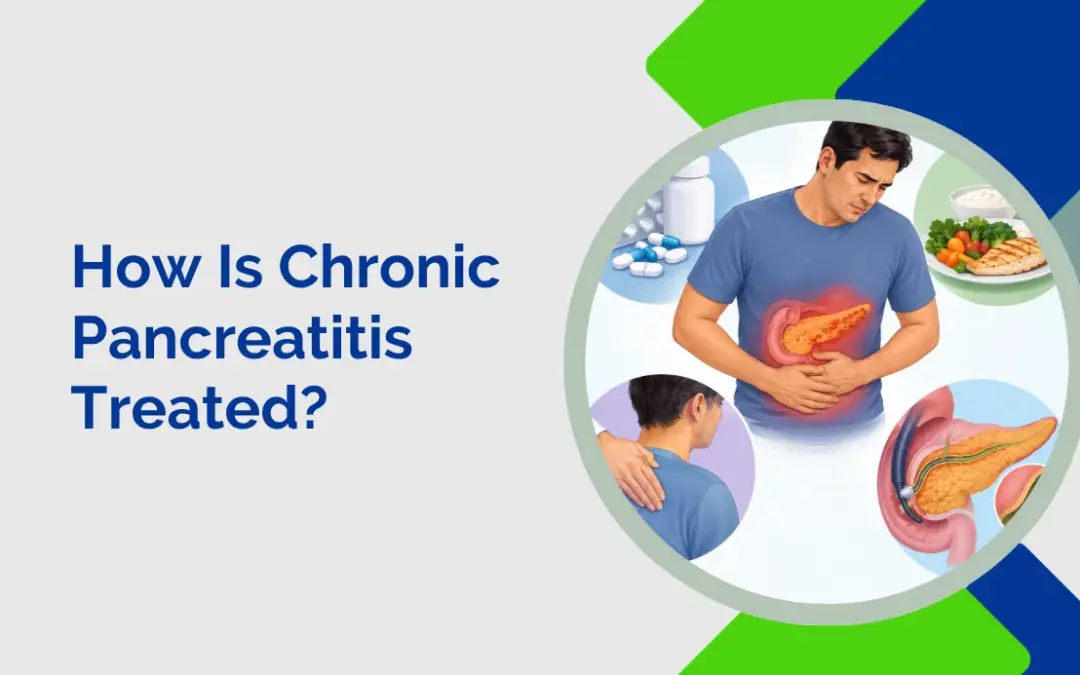
The damage in chronic pancreatitis is permanent, so treatment concentrates on the problems it creates. That covers four things: pain, the digestive enzymes the pancreas has stopped making, complications such as diabetes, and further injury from alcohol and smoking. It’s a long game. Usually more than one treatment is needed at once. But a plan built around symptoms can keep things manageable for years.
According to Dr. Ksheetij Kothari, a Gastroenterologist in Pune, “Patients often arrive hoping for one medicine that fixes everything. With chronic pancreatitis, treatment is really several smaller jobs done together: pain control, enzymes, blood sugar checks, and removing whatever keeps injuring the pancreas.”
How Do Doctors Handle Enzyme Loss and Diabetes?
Scarring gradually cuts the pancreas’s output of both digestive enzymes and insulin. Each has a replacement.
Alcohol and smoking: Guidelines recommend this above everything else. Alcohol and tobacco both go on injuring the pancreas, so stopping them has to come first. It matters even after the damage has started.
Enzyme capsules: Once the pancreas can’t digest fat properly, stools turn pale, greasy, and hard to flush, and weight drops without any change in eating. Capsules swallowed with the first bites of a meal or snack stand in for the missing enzymes. A typical starting dose is 40,000 to 50,000 lipase units for a main meal and about half for a snack, adjusted according to stools and weight.
Meals and vitamins: Smaller, more frequent meals tend to sit better. Cutting fat sharply isn’t necessary once enzymes are working. It’s worth checking vitamins A, D, E, and K, and bone density, since both can drop without any symptoms.
Diabetes follows the damage: When enough of the insulin-making cells are gone, blood sugar rises, and many patients eventually need insulin. Regular sugar checks catch it early.
For how the condition is diagnosed, staged, and followed up, see chronic pancreatitis treatment.
Which Treatments Ease the Pain?
Pain is what sends most people to a doctor, and it’s the symptom that’s hardest to settle. Odd that so many options exist and none works for everyone.
Simple painkillers first: Paracetamol is the usual starting point, with stronger medicines added only if it isn’t enough. Long-term opioids are avoided where possible because they bring problems of their own.
Add-on medicines: Antioxidants are sometimes tried, though the benefit is probably small, and nerve-pain drugs like pregabalin have helped in at least one trial.
Enzymes aren’t a painkiller: Guidelines advise against using them for pain, since trials haven’t shown a consistent effect. They’re for digestion.
A nerve block, for some: An injection around the celiac nerves, guided by endoscopic ultrasound, can calm the pain for a while. It rarely lasts.
For why the pain behaves this way, the piece on chronic pancreatitis pain goes into more detail.
What Comes Next When Medicines Don’t Work?
Persistent pain despite medicines usually prompts a closer look at the pancreas: a CT or MRI scan, and sometimes an endoscopic ultrasound, to find a blocked duct, stones, or a pseudocyst. Whatever turns up, the next step is decided with a pancreas specialist in Pune or another centre that treats pancreatic disease regularly.
Clearing the duct endoscopically: ERCP can remove stones or open narrowed segments that are blocking the main pancreatic duct, often by placing a stent. Shock waves are sometimes used first to break up very large stones.
Draining a pseudocyst: When a fluid pocket presses on the stomach or bowel, it can be drained through the stomach wall, with endoscopic ultrasound guiding the route.
Surgery if endoscopy doesn’t hold: If a blocked duct keeps causing pain after endoscopic options have been tried or have failed, guidelines lean towards surgery for lasting relief.
Different operations for different problems: A widened duct can be drained, a diseased part of the pancreas can be removed, and in selected patients the whole gland is removed and islet cells are transplanted to lower the diabetes risk.
ERCP is usually the first procedure tried when a blocked duct is the cause. How it’s done, and what to expect, is explained in this ERCP test guide.
Key Takeaways: There’s no reversing chronic pancreatitis, so chronic pancreatitis treatment concentrates on pain control, enzyme replacement, diabetes care, and cutting out alcohol and smoking. Enzymes help with digestion rather than pain. If pain persists, endoscopy or surgery may be needed to open a blocked duct. And which one is used depends on the person.
Has upper abdominal pain kept returning even after being treated as acidity?
FAQs
Is there a cure for chronic pancreatitis?
No. The damage can’t be reversed, but symptoms can be managed.
Do enzyme capsules help with the pain?
Not reliably. They mainly improve digestion and oily stools.
Is quitting alcohol worthwhile after the damage has begun?
Yes. Stopping alcohol slows the damage, and quitting smoking helps as well.
Can chronic pancreatitis cause diabetes?
It can, since the insulin-making cells are gradually lost to scarring.
References:
- PubMed: ACG Clinical Guideline, Chronic Pancreatitis (Gardner et al., Am J Gastroenterol 2020): https://pubmed.ncbi.nlm.nih.gov/32022720/
- PubMed: Systematic Approach to Treatment of Chronic Pancreatitis (Javidi, Okwor, Gardner): https://pubmed.ncbi.nlm.nih.gov/41646081/
Disclaimer
This blog is for educational and informational purposes only and is not a substitute for professional medical advice, diagnosis, or treatment.