
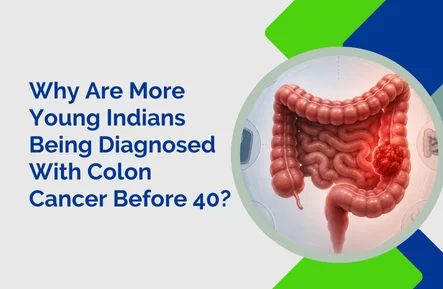
Colon cancer used to be an after-50 problem. Not something you’d check for at 30. That’s not true anymore. Clinics across India are seeing patients in their early 30s walk in with confirmed diagnoses, and there’s no single reason why. Diets have changed fast. People sit more, move less. And symptoms that deserve a second look get waved off as stress or piles. Diagnosis lands late in this age group for one simple reason. Nobody’s actively screening for it at 32.
According to Dr. Ksheetij Kothari, one of the Best Gastroenterologist in Pune, “I’m seeing colon cancer in patients who are 32, 35, sometimes younger. The tumor doesn’t check your age before it grows. What matters is catching it early, not waiting for a textbook age to start worrying.”
What's Fueling the Rise in Colon Cancer Among Young Adults?
Several things are stacking up at once here, not just one cause.
Diet heavy on processed food: Red meat, packaged snacks, low fibre. All three show up again and again in colorectal cancer studies on younger patients. Urban Indian eating habits shifted fast over two decades; the gut didn’t get the memo.
Rising obesity and inactivity: Desk jobs and long stretches of sitting quietly raise inflammation in the gut lining. It builds up over years with nothing to flag it early.
Genetic and hereditary risk: Lynch syndrome and Familial Adenomatous Polyposis explain a real chunk of early-onset cases. Most people underestimate how much family history matters here.
Gut microbiome changes: Overused antibiotics and processed diets shift gut bacteria in ways still being studied. Some early research ties this shift directly to tumour activity in younger colons.
None of this means panic. It means early evaluation is straightforward, and it starts with one direct colon cancer treatment consult rather than a long chain of referrals.
What Warning Signs Should Young Adults Never Ignore?
Symptoms in younger people tend to look ordinary at first glance. That’s exactly the problem.
Blood in the stool: Bright red or dark, and it gets blamed on piles constantly under 40. That assumption needs a proper look first, not a guess.
Bowel habits that won’t settle: Diarrhoea, constipation, or narrow stools running past three weeks. This isn’t a normal digestion swing. Persistence is the flag, not how bad it feels.
Unexplained weight loss or fatigue: Dropping weight without trying, or feeling drained with no clear reason, usually means the body’s fighting something quietly.
Abdominal pain or bloating that lingers: Fine after one heavy meal. Not fine if it sticks around for weeks.
None of these confirm cancer by themselves. But together, or if they hang on past a few weeks, they’re worth ruling out properly. The piece on colon cancer prognosis walks through what a diagnosis actually means long-term, for anyone weighing that question.
Why Choose Dr. Ksheetij Kothari?
Dr. Ksheetij Kothari completed his DM in Gastroenterology at St. John’s Medical College, Bangalore, with fellowship training in Advanced Endoscopy and Endoscopic Ultrasound. As a consultant gastroenterologist at Sahyadri Hospital, his practice is built around catching GI conditions before they become emergencies. For colon cancer specifically, he prioritises early colonoscopy as a frontline tool, giving persistent symptoms in young adults the clinical attention they deserve. That early detection focus is what matters most under 40, because time counts for more when the diagnosis comes early.
Younger patients often get waved off at their first visit elsewhere. Told it’s stress or piles. Dr. Kothari treats persistent symptoms in young adults as worth investigating properly. That’s the outcome that counts here. Catching a treatable stage instead of an advanced one. Call +91 97651 80181 to book a consultation.
Persistent gut symptoms after 30 aren’t something to sit on. A short consult can catch what a delayed one might miss.
FAQs
Is colon cancer really rising in adults under 40 in India?
Yes, several Indian studies confirm a steady rise in early-onset cases.
Should someone under 40 see a doctor if they have persistent gut symptoms?
Yes, age doesn’t matter here, persistent symptoms always deserve proper evaluation.
Can colon cancer in young adults be mistaken for piles?
Yes, bleeding is often blamed on piles, delaying proper diagnosis.
Does diet really increase colon cancer risk in young people?
Yes, processed meat and low fibre intake are strongly linked.
References:
Disclaimer
This blog is for educational purposes only and isn’t a substitute for professional medical advice; consult a qualified doctor for any symptoms or concerns.