
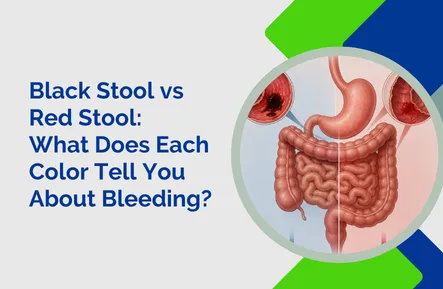
Stool color offers a surprisingly reliable clue about where bleeding in the digestive tract is coming from. Both black and red stool point to bleeding, but which color shows up depends largely on how much time the blood spends being broken down along the way. Black, tarry stool usually means bleeding higher up, in the stomach or the first part of the small intestine, where blood has longer to travel and darken before it’s passed. Bright red or maroon stool generally points lower down, closer to the rectum or colon, where blood exits before that darkening process has much chance to happen.
According to Dr. Ksheetij Kothari, recognized as one of the Best Gastroenterologist in Pune, “Patients often wait to see if bleeding stops on its own before mentioning it. Color and pattern tell us a lot, but they’re clues, not a diagnosis. Any blood in the stool deserves a proper look.”
What Does Black Stool Usually Indicate?
Black stool goes by the medical term melena, and it isn’t just a color, it comes with a fairly distinct set of features.
A tarry texture and strong odor are telltale signs: Real melena feels sticky and looks almost black, with an odor that comes specifically from digested blood. A plain dark stool from food or supplements won’t have that same smell.
It usually points to upper GI bleeding: Sources like peptic ulcers, gastritis, or esophageal varices are common causes, since blood from these sites has time to break down before it’s passed.
A small amount of blood can cause it: It only takes about 100 to 200 millilitres of blood in the upper digestive tract to turn stool black. And the color can linger for days, even once the actual bleeding has stopped.
Certain medications and foods mimic the color: Iron tablets, bismuth based medicines, beetroot, even black liquorice, all of these can darken stool with no bleeding involved at all.
Confirming true melena from a harmless color change usually needs a proper exam. Upper GI bleeding treatment starts with identifying the source accurately before deciding next steps.
What Does Red Stool Usually Indicate?
Red or maroon stool, known as hematochezia, generally points somewhere different in the digestive tract.
Bright red blood usually means a lower source: Conditions like hemorrhoids, anal fissures, diverticular disease, or colitis are common causes, since blood hasn’t had time to darken before being passed.
Maroon colored stool can suggest a faster upper bleed: In rare cases, a large and rapid bleed higher up moves through the gut quickly enough that it doesn’t have time to turn black.
The amount of blood doesn’t always match the risk: Even small streaks can point to something that needs attention. A larger volume isn’t automatically more dangerous, context matters here.
Certain foods can also mimic red stool: Beets, tomatoes, red food dye, these show up often enough that ruling them out comes before assuming an actual bleed.
Inflammation in the digestive tract is behind a good share of these cases. Our piece on Crohn’s disease with rectal bleeding digs into one such cause.
Why Choose Dr. Ksheetij Kothari?
Dr. Ksheetij Kothari completed his DM in Gastroenterology at St. John’s Medical College, Bangalore, along with fellowships in Advanced Endoscopy and Endoscopic Ultrasound. His experience covers the full range of GI bleeding, from ulcers and varices to colitis and diverticular disease. Every case starts the same way: find the actual source first, don’t just treat the symptom. He carries out both diagnostic and therapeutic endoscopy himself, so diagnosis and treatment don’t get split across different hands. That hands on approach counts for a lot when timing is what decides the outcome.
Blood in the stool, black or red, isn’t something worth waiting out at home. So the clinic moves quickly, offering prompt evaluation and endoscopic intervention once bleeding is confirmed. Patients walk away with an actual answer about the source, not just reassurance. Call 9765180181 if you’ve noticed blood in your stool.
A change in stool color is rarely just a coincidence. Is your body trying to tell you something that only a proper evaluation can answer?
FAQs
Does the amount of blood in stool indicate severity?
Not directly, small streaks can still signal a serious underlying cause.
Can stress or diet alone cause blood in stool?
Rarely, most cases trace back to an actual physical cause.
What tests confirm the source of GI bleeding?
Endoscopy or colonoscopy usually pinpoints exactly where the bleeding starts.
Is one episode of blood in stool enough to worry?
Yes, even a single episode should be evaluated properly.
References:
Disclaimer
This blog is for educational purposes only and isn’t a substitute for professional medical advice; consult a qualified doctor for any symptoms or concerns.