
A bloated stomach after appendectomy is common in the first 1 to 2 weeks and usually settles within 2 to 4 weeks. Around 60 to 70 percent of patients have some swelling, gas, or fullness after surgery, mostly from trapped carbon dioxide, slow bowel motility, or post-operative ileus.
According to Dr. Ksheetij Kothari, a senior Gastroenterologist in Pune, “Most bloating after appendix surgery comes from temporary gas buildup and a slow gut. Walking early, hydrating well, and easing back into food resolve it faster than any medication.”
Common Causes of Bloated Stomach After Appendectomy
Bloating after appendectomy has several causes, most of them temporary. Knowing what’s driving the swelling helps you handle it correctly.
Early warning signs parents usually miss
Teen ulcer symptoms are sneaky. They look almost exactly like regular stomach trouble, which is why they get dismissed as stress, junk food, or growing pains. Here’s what to actually pay attention to.
Trapped surgical gas
Carbon dioxide pumped into the abdomen during laparoscopic surgery causes bloating and shoulder pain for 2 to 5 days
Post-operative ileus
The bowel temporarily slows or stops moving after surgery, leading to gas buildup in 10 to 20 percent of patients
Anaesthesia effects
General anaesthesia slows gut motility for 24 to 72 hours, contributing to early bloating
Constipation
Pain medication, especially opioids, slows the colon and causes hard stools and fullness in the first week
Diet changes
Returning to a regular diet too soon can overwhelm a recovering gut
Inflammation near the surgical site
Mild swelling around the incision creates a sensation of fullness
Wound or pelvic infection
Less common but possible. An abscess causes bloating with fever and pain
For background on the surgery itself and how it’s performed, see the appendicitis treatment page.
Symptoms of Bloated Stomach After Appendectomy
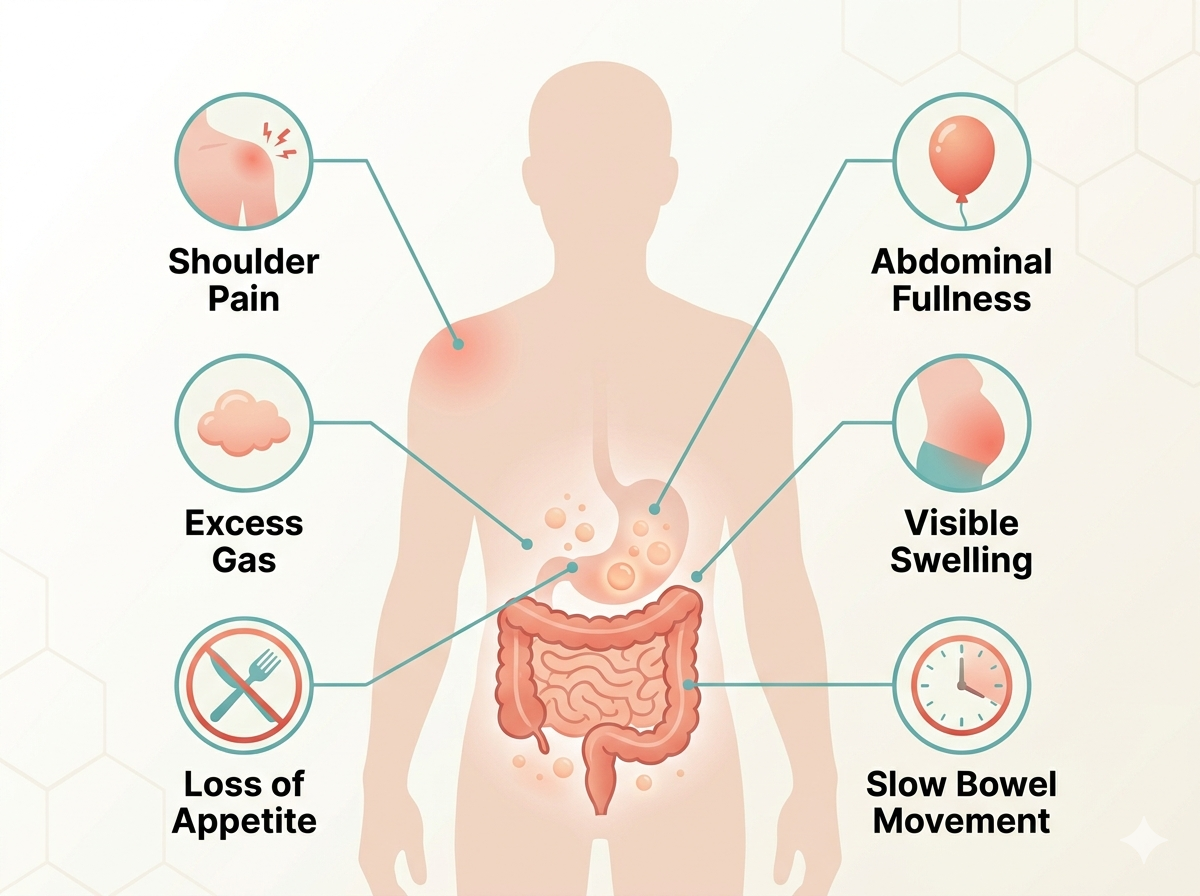
Mild bloating is expected. Knowing what’s normal versus concerning makes recovery less stressful.
- Abdominal fullness or tightness:Common, especially after meals
- Visible swelling:Mild stomach distention is normal in the first week
- Shoulder-tip pain:Trapped carbon dioxide irritates the diaphragm
- Burping or passing more gas:A sign the bowel is waking up, not a problem
- Mild nausea or loss of appetite:Usually settles within 5 to 7 days
- Slow bowel movement:First stool often takes 2 to 4 days after surgery
One thing worth mentioning: bloating that comes with fever, vomiting, or sharp localised pain is not the same as routine post-op bloating. That combination needs imaging, not patience, and can overlap with acute pancreatitis warning signs that should be ruled out early.
How to Manage Bloating
Most bloating responds well to simple steps in the first two weeks. Medication is rarely the first answer.
- Walk for 5 to 10 minutes every 2 hours during the day to stimulate bowel movement
- Sip warm water, jeera water, or weak ginger tea between meals to ease gas
- Eat small, soft meals every 3 hours instead of large heavy ones
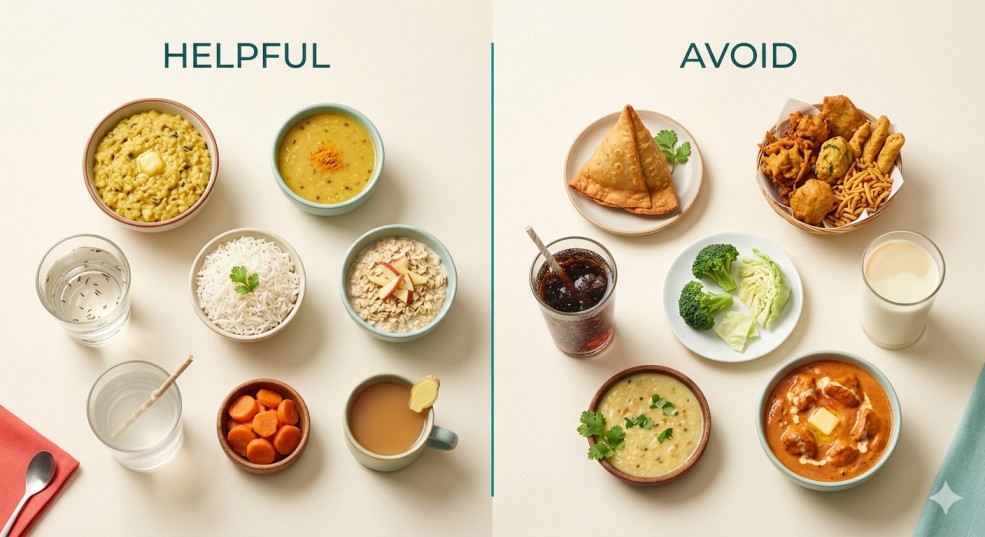
- Avoid carbonated drinks, dairy, raw cruciferous vegetables, and fried foods for 7 to 10 days
- Take a stool softener if constipation appears, especially while on pain medication
- Use heat therapy or gentle abdominal massage on the lower belly to relieve trapped gas
Here’s a quick guide to foods that help versus foods to avoid in the first 2 weeks:
| Category | Helpful | Avoid |
| Carbs | Rice, khichdi, oats, daliya, plain roti | Maida snacks, samosa, pizza |
| Proteins | Dal, eggs, fish, soft chicken | Mutton curry, deep-fried meats |
| Drinks | Warm water, jeera water, coconut water | Soda, cold drinks, beer, strong coffee |
| Vegetables | Steamed gourd, potato, carrot | Raw cabbage, cauliflower, broccoli, beans |
If acid reflux or heartburn also flares up during recovery, acid peptic disease treatment can help calm the gut alongside these diet steps.
Bloating not settling after appendix surgery? Book a consultation with one of Pune’s leading gastroenterologists today
When To Consult Doctor
Some bloating can wait for routine follow-up. Other patterns need urgent evaluation. Call your doctor right away if you have:
- Severe abdominal pain that doesn’t ease with rest or medication
- Fever above 100.4°F with chills
- Persistent vomiting beyond 48 hours
- No bowel movement for more than 4 days
- Redness, warmth, or pus discharge from the incision
- Hard, swollen abdomen with tight or shiny skin
- Bloating that suddenly worsens after initial improvement
If bloating continues past the recovery window or returns months later, it can point to a longer-term motility issue. Read more about always feeling full and bloated for chronic bloating causes and care.
Patients across Pune trust Dr. Ksheetij Kothari for post-surgical digestive care due to his advanced endoscopy and ERCP experience and attentive follow-up. Recognised at the International Healthcare Awards 2022, he handles complex post-operative cases with confidence.
Worried about bloating after surgery? Book a consultation with Pune’s leading gastroenterologists today
FAQs
How long does bloating last after appendectomy?
Most patients see significant improvement in 1 to 2 weeks, with full resolution in 3 to 4 weeks.
Is it normal to feel bloated after appendix surgery?
Yes, mild bloating is normal in the first week, mainly from trapped surgical gas and slow bowel motility.
What foods help reduce bloating after appendix removal?
Soft, low-fat foods like khichdi, dal, soups, and steamed vegetables work best in the first 10 days.
Can bloating after appendectomy mean infection?
Bloating with fever, chills, or worsening pain can indicate an abscess or wound infection and needs prompt evaluation.
When should I worry about gas after surgery?
Persistent gas with no bowel movement for over 3 days or severe abdominal swelling needs medical attention.