
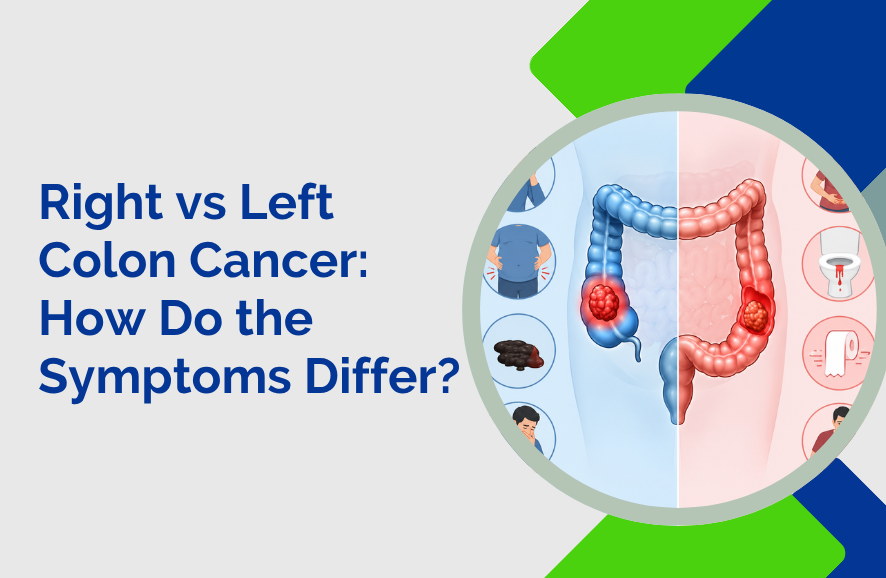
The large intestine isn’t uniform. The right side is wide and carries loose, liquid stool, while the left side narrows and handles stool that’s firmer and more formed. That difference in space and consistency is why colon cancer symptoms change depending on where a tumour sits. A growth on the right can stay quiet for a long time. Not so on the left. And knowing which pattern belongs to which side helps people spot warning signs they’d otherwise brush off.
According to Dr. Ksheetij Kothari, a Gastroenterologist in Pune, “Patients expect cancer to hurt or bleed visibly. On the right side it usually does neither. A low haemoglobin count can be the only clue, so unexplained anaemia is a reason to look inside the colon.”
Why Do Right Sided Colon Cancer Symptoms Go Unnoticed for So Long?
Stool on the right is still liquid and there’s plenty of room, so a tumour can grow for a while before anything gets in its way. Odd that the quieter side usually gets found later.
Anaemia can be the first sign: Slow bleeding can go unseen for months while iron runs low. Among 189 patients in one study, 22% of those with right-sided tumours were anaemic, against 6% with left-sided ones. Tiredness is often all they mention.
A vague ache in the belly: Usually dull, low on the right or near the navel, and it comes and goes without any pattern. Easy to put down to gas.
Weight loss nobody planned: People often notice it first in how their clothes fit. They’re eating the same as always and still losing weight.
Darker stool or a lump you can feel: Blood from the right colon is mixed in with stool by the time it’s passed, which makes the stool dark or maroon rather than bright red. In some patients a large tumour can be felt through the abdominal wall.
It’s easy to explain these signs away, but only an examination can tell whether right sided colon cancer symptoms are behind them. How diagnosis and staging work is outlined under colon cancer treatment.
Which Symptoms Suggest a Tumour on the Left?
On the left the passage is narrower and stool is firmer, so even a small growth gets in the way. Colon cancer symptoms tend to show up sooner on this side.
Bowel habits that shift: A few days of constipation, then loose stools, then constipation again. Anything running past three weeks counts.
Narrow, pencil-thin stools: Stool has to squeeze past the growth and comes out thinner than usual. One odd day means little. A new normal doesn’t.
Bright red blood: It’s closer to the exit, so blood stays fresh. Often blamed on piles. Sometimes wrongly.
Cramping, bloating, and blockage: Cramps and a bloated belly show up often here. Passing no gas or stool at all is an emergency that needs care the same day.
Outlook can differ by side too, which the colon cancer prognosis article explains.
When Does a Colonoscopy Make Sense?
Neither pattern confirms cancer. Piles, infections, and irritable bowel syndrome can look much the same. Duration matters, and so does whether the change is new for you.
Anaemia with no clear reason: Haemoglobin below 13 g/dL in men or 12 g/dL in women, with no dietary or menstrual cause, is a reason to check the colon.
Bowel changes beyond three weeks: Most upsets settle in a few days. Longer ones shouldn’t be guessed at.
Blood in the stool: Any visible blood needs an explanation, whatever its colour. Piles are a frequent cause, so it’s easy to stop looking there.
Age and family history: Screening usually begins at around 45. A close relative with colorectal cancer usually moves that earlier.
But a colonoscopy does more than look for cancer. The doctor sees the whole colon, takes biopsies if needed, and can remove polyps then and there. The steps, preparation included, are covered in this colonoscopy procedure guide.
Key Takeaways: Anaemia, tiredness, and a dull belly ache are more typical of the right side. Bowel habit changes and visible blood lean left. None of this proves cancer on its own. If symptoms last more than a few weeks, anaemia has no explanation, or the family history is positive, the colon should be examined without waiting for pain.
Could constant tiredness with low haemoglobin be coming from the colon?
FAQs
Which part of the colon tends to cause anaemia?
The right colon, since slow bleeding there often goes unseen for months.
Why do left-sided cancers cause obstruction first?
Firm stool meets a narrower channel, so even a small growth can block it.
Can colon cancer symptoms pass for piles or gas?
Yes, which is often why diagnosis gets delayed by weeks or months.
Does the side of the tumour affect treatment outcomes?
Studies disagree, though the stage at diagnosis seems to matter more.
References:
- PMC (NIH): Right-Sided Versus Left-Sided Colon Cancer, A 5-Year Single-Center Observational Study: https://www.ncbi.nlm.nih.gov/pmc/articles/PMC11817846/
- PMC (NIH): Clinicopathological Differences and Correlations Between Right and Left Colon Cancer: https://pmc.ncbi.nlm.nih.gov/articles/PMC7190956/
Disclaimer
This blog is for educational and informational purposes only and is not a substitute for professional medical advice, diagnosis, or treatment.