
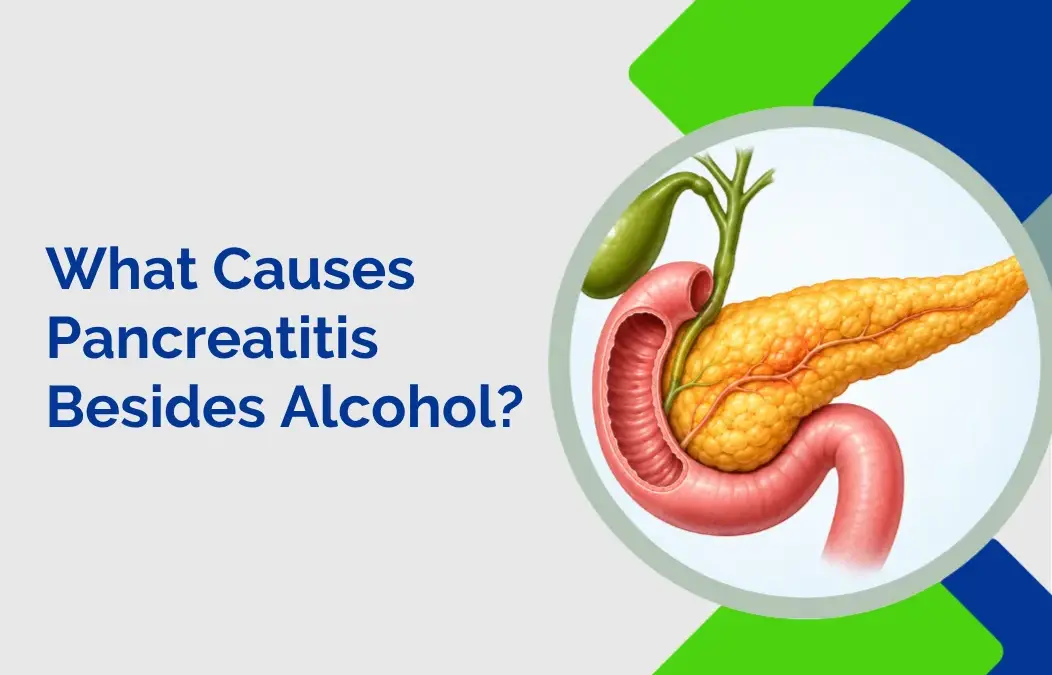
Alcohol usually takes the blame for pancreatitis, though it isn’t behind every attack. Gallstones blocking the pancreatic or bile duct account for more cases overall, more than alcohol does. High triglycerides, certain medications, structural issues in the ducts, and autoimmune conditions round out most of what’s left.
According to Dr. Ksheetij Kothari, recognized as one of the best Gastroenterologist in Pune, “People walk in assuming pancreatitis only happens from heavy drinking. That assumption gets in the way of finding what’s actually going on, since gallstones cause more cases than alcohol.”
What Are the Main Non Alcoholic Pancreatitis Causes?
Plenty of pancreatitis cases trace back to something other than alcohol entirely.
Gallstones top the list by a wide margin: A stone lodging in the shared duct between the gallbladder and pancreas backs up digestive enzymes, and that single mechanism causes more attacks than alcohol.
High triglycerides can trigger an attack on their own: Past a certain threshold, fat circulating in the blood turns toxic enough to inflame the pancreas directly.
Certain medications carry a real risk: Some diuretics, anti-seizure drugs, and immune suppressing medicines show up often enough in pancreatitis cases that doctors keep an eye out for them.
Structural abnormalities in the ducts lead to repeat episodes: Pancreas divisum and similar anatomical quirks block normal drainage, and this tends to go unnoticed until someone’s had more than one attack.
Sorting out which of these is actually behind an attack takes proper testing, not a guess. Pancreatitis treatment here starts from the actual cause rather than a default diagnosis.
How Common Is Non Alcoholic Pancreatitis Compared to Alcohol Related Cases?
In day to day practice, non alcoholic pancreatitis causes often outnumber alcohol related ones.
Gallstone pancreatitis shows up more often in women: Hormonal factors and higher overall rates of gallstones both tip the numbers that way.
Autoimmune pancreatitis often slips through undetected at first: On imaging it can look enough like pancreatic cancer that misdiagnosis becomes a real risk until biopsy or specific blood markers confirm otherwise.
A meaningful share of cases stay idiopathic: Even after a thorough workup, doctors don’t always land on an exact cause for a notable percentage of episodes.
Pain patterns tend to differ depending on the cause: Structural and autoimmune triggers recur more than a single gallstone event does, and that shapes how long term management gets handled.
Recurring pancreatitis pain doesn’t always trace back to the same source twice. Our piece on chronic pancreatitis pain looks at why the damage can linger even once the original trigger has been treated.
Why Choose Dr. Ksheetij Kothari for Pancreatitis Management?
Dr. Ksheetij Kothari completed his DM in Gastroenterology at St. John’s Medical College, Bangalore, with fellowships in Advanced Endoscopy and Endoscopic Ultrasound. Instead of defaulting to alcohol as the cause, he works to pin down what’s actually driving each case, since gallstones, triglycerides, and structural issues each call for a different plan. Endoscopic ultrasound helps catch gallstones and ductal abnormalities that standard imaging sometimes misses entirely.
Pancreatitis that keeps coming back usually has a cause nobody’s found yet. Call 9765180181 to get it properly investigated.
Had a pancreatitis attack with no history of heavy drinking?
FAQs
What causes pancreatitis besides alcohol?
Gallstones, high triglycerides, certain medications, and structural or autoimmune conditions mostly.
What is the most common non alcoholic pancreatitis cause?
A gallstone blocking the pancreatic or bile duct, more often than anything else.
Can high triglycerides really cause pancreatitis?
Yes, particularly once levels climb well past the normal healthy range.
Is non alcoholic pancreatitis less serious than alcohol related pancreatitis?
Not really. How serious it gets depends on the case, not the cause.
References:
- National Institute of Diabetes and Digestive and Kidney Diseases (NIDDK) — Pancreatitis: https://www.niddk.nih.gov/health-information/digestive-diseases/pancreatitis
- NCBI Bookshelf (StatPearls) — Acute Pancreatitis: https://www.ncbi.nlm.nih.gov/books/NBK482468/
Disclaimer
This blog is for educational purposes only and isn’t a substitute for medical advice. Consult a doctor for symptoms or concerns.