
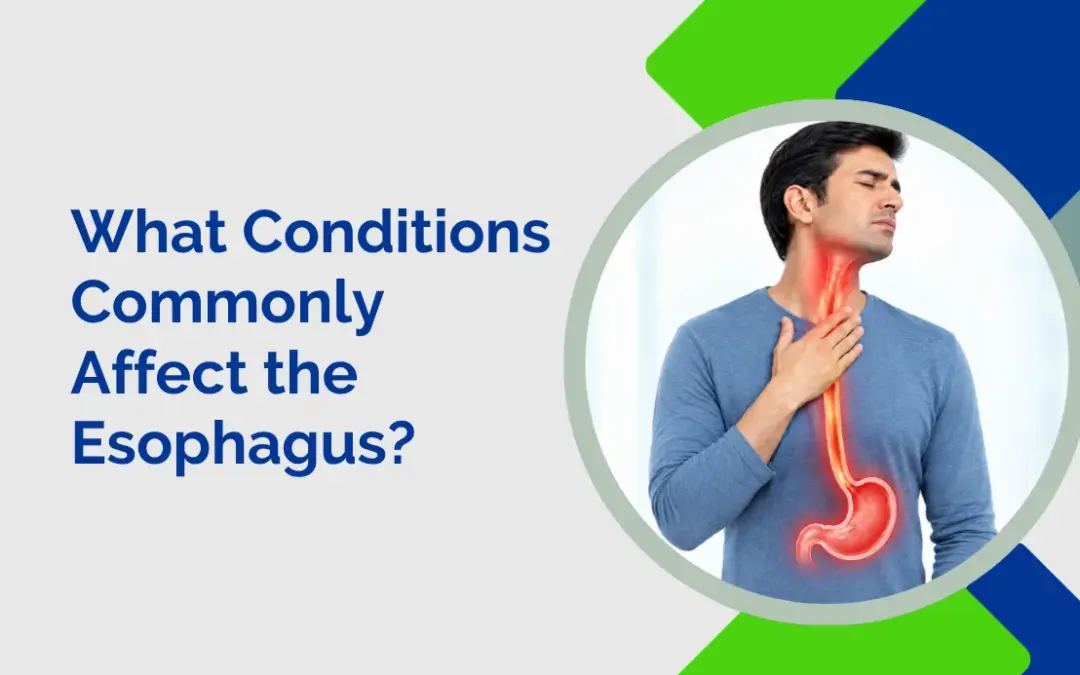
Reflux is the big one here. Most esophagus trouble comes down to stomach acid working its way up and irritating the lining, and nothing else comes close in how often it shows up. Inflammation and swallowing problems make up most of the rest. People rarely think to separate any of it from plain acidity until the symptoms won’t go away.
According to Dr. Ksheetij Kothari, recognized as one of the best Gastroenterologist in Pune, “Everyone calls it acidity. Reflux, inflammation, a swallowing problem, none of them feel identical once you actually look closely. That distinction is what decides how treatment goes.”
What Are the Most Common Conditions That Affect the Esophagus?
Four conditions cover almost everything seen in clinic.
GERD sits at the top, and it isn’t close: acid pushing back into the esophagus drives most chronic heartburn, which is why it’s usually the first thing ruled in.
Esophagitis comes next: repeated acid exposure wears down the lining until swallowing itself starts to hurt.
Barrett’s esophagus takes years to build: untreated reflux slowly reshapes the tissue, and it often gets caught only once an endoscopy happens to look.
Motility disorders are the outlier: achalasia has nothing to do with acid levels. It’s about how the esophagus physically moves food, so the fix looks completely different too.
Pinning down which one is actually behind the symptoms takes testing, not a guess. Acid reflux treatment here starts with getting that answer first.
What Symptoms Point to an Esophagus Problem?
Most people write these off as plain acidity. Timing tends to be the giveaway.
Heartburn after meals: burning behind the breastbone, usually worse lying down or leaning forward.
Difficulty or pain swallowing: food feels stuck going down, more often a sign of inflammation or a motility issue than simple reflux.
Regurgitation and a sour taste: acid or food rising back up toward the throat.
Chronic cough or hoarseness: reflux reaching that high can trigger a cough with zero connection to a cold, and it’s the one link most people never make on their own.
Not sure if it’s an ulcer or gastritis or something further up in the esophagus? A GI tract specialist sorts that out fast.
Why Choose Dr. Ksheetij Kothari for Esophagus Conditions?
Dr. Ksheetij Kothari holds a DM in Gastroenterology from St. John’s Medical College, Bangalore, along with fellowships in Advanced Endoscopy and Endoscopic Ultrasound. He doesn’t start from an assumption of reflux. Confirming the actual condition comes first, since the entire treatment plan hinges on that. Endoscopy and targeted testing happen before any decision gets made, and that’s largely why people looking for a doctor for esophagus symptoms end up at his clinic.
Ongoing heartburn or trouble swallowing needs a proper workup, not another round of antacids. Call 9765180181 to get it checked.
Ready to get your heartburn or swallowing trouble checked?
FAQs
What conditions commonly affect the esophagus?
GERD tops the list, followed by esophagitis, Barrett’s esophagus, and achalasia.
What's the most common esophagus condition?
GERD by far, driven by acid flowing back from the stomach.
When should I see a doctor for esophagus symptoms?
Once heartburn or swallowing trouble sticks around past two weeks, get it checked.
Can esophagus conditions be treated without surgery?
Usually yes. Medication and lifestyle changes handle most cases on their own.
References:
- NCBI Bookshelf (StatPearls) — Gastroesophageal Reflux Disease: https://www.ncbi.nlm.nih.gov/books/NBK441938/
- NCBI Bookshelf (StatPearls) — Esophagitis: https://www.ncbi.nlm.nih.gov/books/NBK442012/
Disclaimer
This blog is for educational purposes only and isn’t a substitute for professional medical advice; consult a qualified doctor for any symptoms or concerns.