
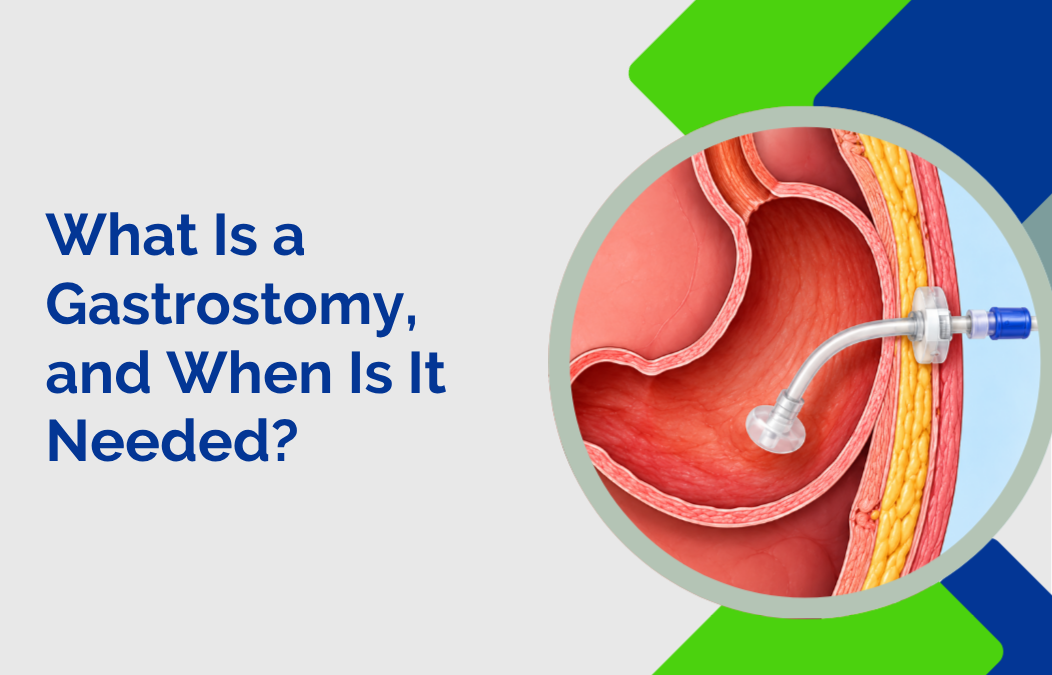
The name sounds more intimidating than the procedure itself. A gastrostomy is a soft feeding tube fitted into the stomach through a small hole in the abdomen. Many people know it as a G-tube or PEG tube. It becomes an option once eating by mouth is no longer safe or sufficient to meet the body’s needs.
According to Dr. Ksheetij Kothari, a gastroenterologist in Pune, “People hear gastrostomy and think of it as a last resort. Most of the time that’s not the case. For the right patient, it’s just a practical way to stay nourished.”
When Is a Gastrostomy Needed?
A gastrostomy doctor doesn’t recommend this for every feeding problem. The question usually arises only after normal eating has become unsafe or too little.
Swallowing problems that won’t resolve quickly: After a stroke, or with ALS, swallowing can stay unsafe for weeks. Food entering the airway can cause pneumonia.
Head and neck cancers blocking normal swallowing: A tumor can narrow the throat, and radiation can leave scarring that blocks it further.
Long term nutritional support beyond four weeks: A nasogastric tube is generally used for short term. After about a month it can cause nasal or throat irritation and may slip, so a gastrostomy holds up better.
Certain neurological conditions affecting intake: Dementia or serious brain injury can slowly dull the swallowing reflex, so feeding help may last for months.
None of this should be settled on guesswork. A review of swallowing, nutrition and stomach anatomy comes first, and it’s usually done through endoscopic services before any tube goes in.
How Is a Gastrostomy Procedure Performed?
Open surgery is rarely needed for a gastrostomy. Most tubes go in with a scope instead.
An endoscope guides the placement: A thin camera scope passes down the throat into the stomach, so the doctor can watch placement on a screen.
The tube is placed through a small skin opening: This approach is known as PEG, and the cut is barely wider than the tube.
The procedure usually takes under an hour: Sedation keeps the patient comfortable. Some go home the same day, and some stay briefly for observation.
Recovery focuses on site care and gradual feeding: Gentle cleaning matters most in the first few days. Feeds usually restart within a day and increase slowly.
Trouble swallowing is usually what starts this conversation. Our piece on esophagus conditions looks at some of the causes behind it.
What Problems Can a Gastrostomy Tube Cause?
Most people manage a gastrostomy tube without major trouble. It does need care every day, and small issues are easier to fix when they’re caught early.
Skin irritation or infection at the site: Redness, swelling or discharge around the opening are the usual signs. Cleaning helps, and some cases need medicine.
Leakage around the tube: Some stomach fluid may seep out as the opening heals. Adjusting the tube or using a skin barrier usually helps.
Blockage of the tube: Thick feeds and crushed pills are the usual culprits. A water flush after every use prevents most clogs.
Accidental dislodgement: A tube that slips out early in healing needs a GI tract doctor’s attention quickly. The opening can start to close within hours.
Feeding support also turns up in digestive cancers, where eating becomes hard for other reasons. Our piece on stomach cancer treatment explains how care is planned by stage
Key Takeaways: Gastrostomy is a feeding tube that enters the stomach through the abdominal wall, usually placed using an endoscopic procedure. It’s considered when swallowing problems, head and neck cancers or neurological illness make eating by mouth unsafe, or when feeding support has to last past four weeks or so. Recovery is usually smooth and fast. The site still needs daily care, and redness, leakage or a loose tube should be reported to the doctor.
Struggling to eat enough because of swallowing trouble or a medical condition?
FAQs
What is a gastrostomy?
A feeding tube placed through the skin, directly into the stomach
When is a gastrostomy needed?
Generally when swallowing trouble or illness makes eating by mouth unsafe.
Is a gastrostomy a major surgery?
No. Most go in endoscopically, in under an hour, without open surgery
For how long can someone keep a gastrostomy tube?
That varies. Some people use one for a few months and others for years.
References:
- PMC (NIH), Percutaneous Endoscopic Gastrostomy in 41 Patients: Indications and Clinical Outcome: https://pmc.ncbi.nlm.nih.gov/articles/PMC1293491
- PMC (NIH), Percutaneous Endoscopic Gastrostomy, Duodenostomy and Jejunostomy: https://www.ncbi.nlm.nih.gov/pmc/articles/PMC2362464/
Disclaimer
This blog is for educational purposes only and isn’t a substitute for professional medical advice; consult a qualified doctor for any symptoms or concerns.