
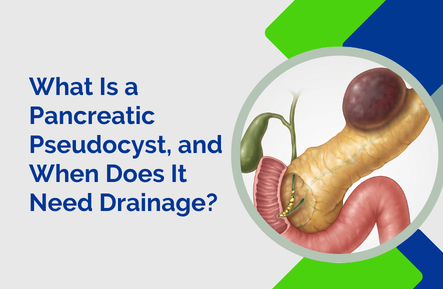
A pancreatic pseudocyst is a fluid filled sac that forms just outside the pancreas, typically four to six weeks after a bout of pancreatitis or, less commonly, abdominal trauma. Inside, it holds a mixture of pancreatic enzymes, fluid, and tissue debris. No true cellular lining, though, which is exactly why it’s classified as a pseudocyst rather than a true cyst. Most stay small and resolve without any intervention. But once complications develop or symptoms turn serious, drainage stops being optional.
According to Dr. Ksheetij Kothari, recognized as one of the Best Gastroenterologist in Pune, “Not every pseudocyst requires intervention. The decision depends on size, symptoms, and whether infection is present, not on the diagnosis alone. Many patients assume drainage is the standard next step, but that isn’t the case.”
How Does a Pancreatic Pseudocyst Actually Form?
A pseudocyst doesn’t form randomly. It’s the pancreas’s way of handling an injury that didn’t heal through the usual route, sealing off the leak rather than clearing it away.
Pancreatitis triggers fluid leakage: Whether the inflammation is acute or chronic, it damages the pancreatic duct. Enzyme rich fluid then seeps into nearby tissue rather than draining the way it should.
The body walls it off over time: Granulation tissue and fibrosis gradually form a capsule around the leaked fluid, usually within about four weeks. Past that point, it’s no longer just an early collection, it’s an actual pseudocyst.
Trauma is a less common cause: In children especially, a blunt abdominal injury alone can set off the same process, no pancreatitis needed.
Alcohol and gallstones remain the biggest risk factors: Between them, they cause the bulk of pancreatitis cases. So it follows that they’re behind most pseudocysts as well.
Confirming the diagnosis usually means imaging, sometimes paired with a cyst fluid analysis. Endoscopic services matter at both ends of this, first to diagnose, later to treat if drainage turns out to be needed.
When Does a Pancreatic Pseudocyst Need Drainage?
Treatment isn’t the same for every case. A short list of factors usually settles the approach.
Size beyond roughly six centimetres raises concern: Bigger pseudocysts are more likely to cause pain, press on nearby organs, or just sit there instead of shrinking.
Persistent symptoms tip the balance: Pain, nausea, or early fullness that hangs around despite waiting usually means the cyst isn’t going to resolve on its own.
Infection changes everything: An infected pseudocyst can’t sit and wait. The risk of sepsis climbs quickly once infection sets in.
Complications like bleeding or obstruction demand action: Pressure on the bile duct, stomach, or nearby blood vessels rarely gets better through observation alone.
Quite a few of these cases trace back to pancreatitis that went unnoticed or untreated for too long. Our earlier piece on acute pancreatitis warning signs explains how to catch the problem before it gets this far.
Why Choose Dr. Ksheetij Kothari?
Dr. Ksheetij Kothari completed his DM in Gastroenterology at St. John’s Medical College, Bangalore, and holds fellowships in Advanced Endoscopy and Endoscopic Ultrasound. His pancreatic practice covers everything from routine pancreatitis to complex fluid collections that need active management. Every pseudocyst case gets weighed on its own terms, size, symptoms, and infection risk all factored in before a plan is set. He handles the drainage procedures himself. That hands on involvement is really what separates routine monitoring from cases that need genuine specialist judgment.
Putting off care for a symptomatic or infected pseudocyst raises the odds of serious complications, sepsis included. The clinic offers endoscopic ultrasound guided drainage, cutting down the need for open surgery in most cases. Patients get a clear reason for whether watchful waiting or drainage suits their situation, not a decision handed down without explanation. Call 9765180181 to book appointment.
Still getting abdominal discomfort weeks after a pancreatitis flare? A proper scan settles it, guessing doesn’t.
FAQs
What causes a pancreatic pseudocyst to form?
Pancreatitis damages the duct, and the leaked fluid gets sealed off over time.
Can a pancreatic pseudocyst go away without treatment?
Yes, smaller pseudocysts under six centimetres usually clear up within weeks.
How is a pancreatic pseudocyst diagnosed?
CT scans or ultrasound usually confirm it, sometimes with cyst fluid testing.
Is pseudocyst drainage always done through surgery?
No, endoscopic drainage handles most cases today, open surgery is rarely needed.
References:
Disclaimer
This blog is for educational purposes only and isn’t a substitute for professional medical advice; consult a qualified doctor for any symptoms or concerns.