
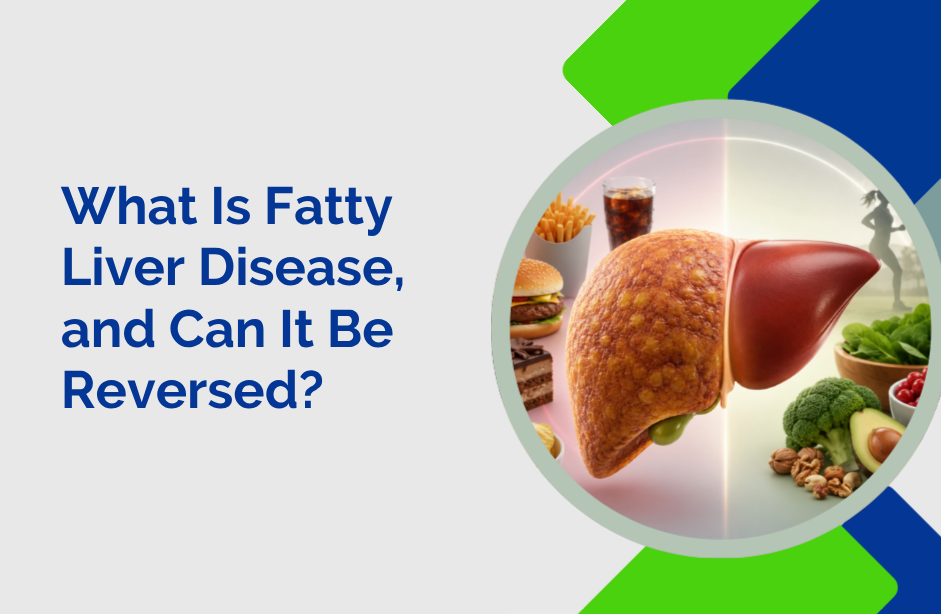
Fatty liver disease refers to excess fat accumulating in liver cells, often without producing any noticeable symptoms in its early stages. Early fatty liver typically responds well to lifestyle changes such as weight loss, regular physical activity, a balanced diet, and avoiding alcohol. That window for reversal narrows considerably once the condition progresses into significant scarring or cirrhosis, where the damage tends to become permanent. The stage at which fatty liver is identified, therefore, matters just as much as the diagnosis itself.
According to Dr. Ksheetij Kothari, recognized as one of the Best Gastroenterologist in Pune, “Most people are surprised fatty liver can actually reverse itself. It’s one of the few liver conditions where lifestyle alone genuinely turns the numbers around, provided it’s caught early enough.”
What Causes Fatty Liver Disease in the First Place?
There are four distinct causes of fatty liver disease, and the underlying cause behind each is fairly distinct.
Metabolic causes: Obesity, insulin resistance, type 2 diabetes, and high cholesterol are the main drivers behind NAFLD, now more often referred to as MASLD in current medical literature.
Alcohol-related causes: Regular heavy drinking overworks the liver’s ability to process fat, and this type can develop even without any underlying metabolic issue.
Dietary factors: Excess sugar and refined carbohydrates contribute significantly to fat accumulation in the liver over time, independent of total fat intake.
Genetic factors: Certain gene variants make some individuals more prone to liver fat accumulation even at a normal body weight, though lifestyle remains the larger overall factor.
A proper evaluation of your digestive and liver health usually starts with blood tests and imaging. Fatty liver disease treatment begins with identifying exactly which type is involved.
Can Fatty Liver Disease Actually Be Reversed?
Reversal is genuinely possible, though it depends heavily on how early the condition is identified.
Weight loss: Losing just 5 to 10 percent of body weight can measurably reduce liver fat, with greater weight loss showing even stronger improvement in clinical studies.
Exercise: Regular physical activity, roughly 150 minutes a week, can reduce liver fat on its own, independent of how much weight is actually lost.
Alcohol reduction: Even in non-alcohol-related fatty liver disease, limiting alcohol can reduce the unnecessary burden on a liver that is already trying to recover.
Cirrhosis risk: Once fibrosis progresses into cirrhosis, the scarring is largely permanent, and treatment shifts toward managing complications rather than full reversal.
Catching fatty liver at its earliest, most reversible stage makes the greatest difference. Our piece on stage 1 fatty liver looks at what that early window actually looks like.
Why Choose Dr. Ksheetij Kothari?
Dr. Ksheetij Kothari completed his DM in Gastroenterology at St. John’s Medical College, Bangalore, with fellowships in Advanced Endoscopy and Endoscopic Ultrasound. As a gastroliver doctor treating fatty liver cases regularly, his focus is on identifying the condition while it remains reversible, supported by proper blood work and imaging to confirm both type and stage.
Fatty liver rarely produces symptoms early, which is why it often goes undetected until routine testing flags it. The clinic offers the diagnostics needed to confirm the condition and track progress over time. Call 9765180181 to get your liver checked.
Been told your liver has some fat buildup and unsure what that actually means for you?
FAQs
Is fatty liver disease reversible?
Yes, especially in early stages, through weight loss and lifestyle changes.
What's the difference between alcoholic and non-alcoholic fatty liver?
One stems from heavy drinking, the other from metabolic factors like obesity.
How much weight loss helps reverse fatty liver?
Losing 5 to 10 percent of body weight often makes a real difference.
Can fatty liver turn into cirrhosis if untreated?
Yes, over time it can progress to fibrosis and eventually cirrhosis.
References:
- NCBI (PMC) — Non-alcoholic fatty liver disease (NAFLD): https://www.ncbi.nlm.nih.gov/pmc/articles/PMC8919523/
- NIDDK (NIH) — Symptoms and causes of NAFLD and NASH: https://www.niddk.nih.gov/health-information/liver-disease/nafld-nash/symptoms-causes
Disclaimer
This blog is for educational purposes only and isn’t a substitute for professional medical advice; consult a qualified doctor for any symptoms or concerns.