
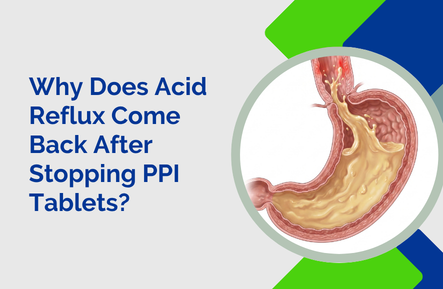
Acid reflux returning once PPI tablets, like omeprazole or pantoprazole, are stopped isn’t always proof the original problem never went away. The stomach compensates for weeks of suppressed acid production by producing more acid than usual once the drug is out of the system, a response known as rebound acid hypersecretion. This overcorrection can feel more intense than the reflux that led to treatment in the first place. So restarting the same tablets isn’t always the right first move without understanding what’s actually happening.
According to Dr. Ksheetij Kothari, recognized as one of the Best Gastroenterologist in Pune, “Patients often stop their tablets and assume the reflux is back for good. In many cases, the body is just reacting to the sudden change, not confirming the original disease returned.”
What Happens Inside the Stomach When PPI Tablets Are Stopped?
The stomach doesn’t simply return to normal the moment a PPI is stopped. It takes time to recalibrate, and that gap is often where symptoms flare hardest. Ironic, given how routine stopping a tablet usually feels.
Gastrin levels stay elevated for a while: Long term acid suppression pushes gastrin production up. That doesn’t drop the moment tablets stop, so acid output stays higher than baseline for a stretch.
Acid producing cells increase in number: Extended PPI use can expand the cell population responsible for acid secretion. More capacity for acid once suppression lifts, in other words.
The rebound window is usually temporary: Most reports place this adjustment period around two to four weeks. It varies though, depending on how long the PPI was used.
Not everyone experiences it the same way: Rebound symptoms affect a real share of users, not all of them. That inconsistency is part of why it gets mistaken for treatment failure.
Working out whether symptoms reflect true reflux or a passing rebound usually needs proper evaluation. Acid peptic disease treatment approaches it through testing, not guesswork.
How Can You Tell the Difference Between Rebound and Real Relapse?
Not every flare after stopping a PPI means the original condition is back. Telling the two apart takes a closer look than most people give it.
Timing offers a useful clue: Rebound symptoms typically show up within days of stopping. A genuine relapse can take longer, or mirror the original pattern more closely.
Severity tends to differ: Rebound acid symptoms are usually milder than the reflux that led to treatment in the first place, though that isn’t a fixed rule.
Response to tapering matters: Gradually lowering the dose instead of stopping abruptly often prevents or softens rebound symptoms. A true relapse wouldn’t respond the same way.
Underlying damage changes the picture: Patients with confirmed esophagitis or Barrett’s esophagus are more likely facing genuine disease progression, not a temporary rebound.
Long term acid suppression can affect the stomach lining itself too, beyond just controlling acid. Our piece on stomach lining thinning looks at what prolonged PPI use can do over time.
Why Choose Dr. Ksheetij Kothari?
Dr. Ksheetij Kothari trained in DM Gastroenterology at St. John’s Medical College, Bangalore, with fellowships in Advanced Endoscopy and Endoscopic Ultrasound. His approach to acid related complaints goes beyond simply restarting medication on request. Every case gets assessed for whether continued treatment, tapering, or further testing actually fits. He factors in how long a patient’s been on PPIs and whether structural damage is present before deciding next steps. That distinction, habit versus genuine need, shapes every consultation.
Unnecessary long term PPI use carries its own risks, and stopping without a plan carries rebound risk too. So, Dr. Kothari runs endoscopy and testing to confirm what’s actually happening before any medication decision gets made. Patients leave with a specific plan, not a default prescription. Call 9765180181 to book appointment.
Restarted your PPI the moment symptoms came back? Was that based on an actual flare, or just the fear of one?
FAQs
Why does acid reflux come back after stopping PPI tablets?
Rebound acid hypersecretion often follows PPI withdrawal, not necessarily true disease relapse.
How long does PPI rebound acidity usually last?
Most rebound symptoms settle within two to four weeks.
Can tapering off PPIs prevent rebound symptoms?
Yes, gradually reducing the dose often lowers the chance of rebound.
Should I restart PPIs immediately if symptoms return?
Not always, get evaluated first to confirm it’s a true relapse.
References:
Disclaimer
This blog is for educational purposes only and isn’t a substitute for professional medical advice; consult a qualified doctor for any symptoms or concerns.